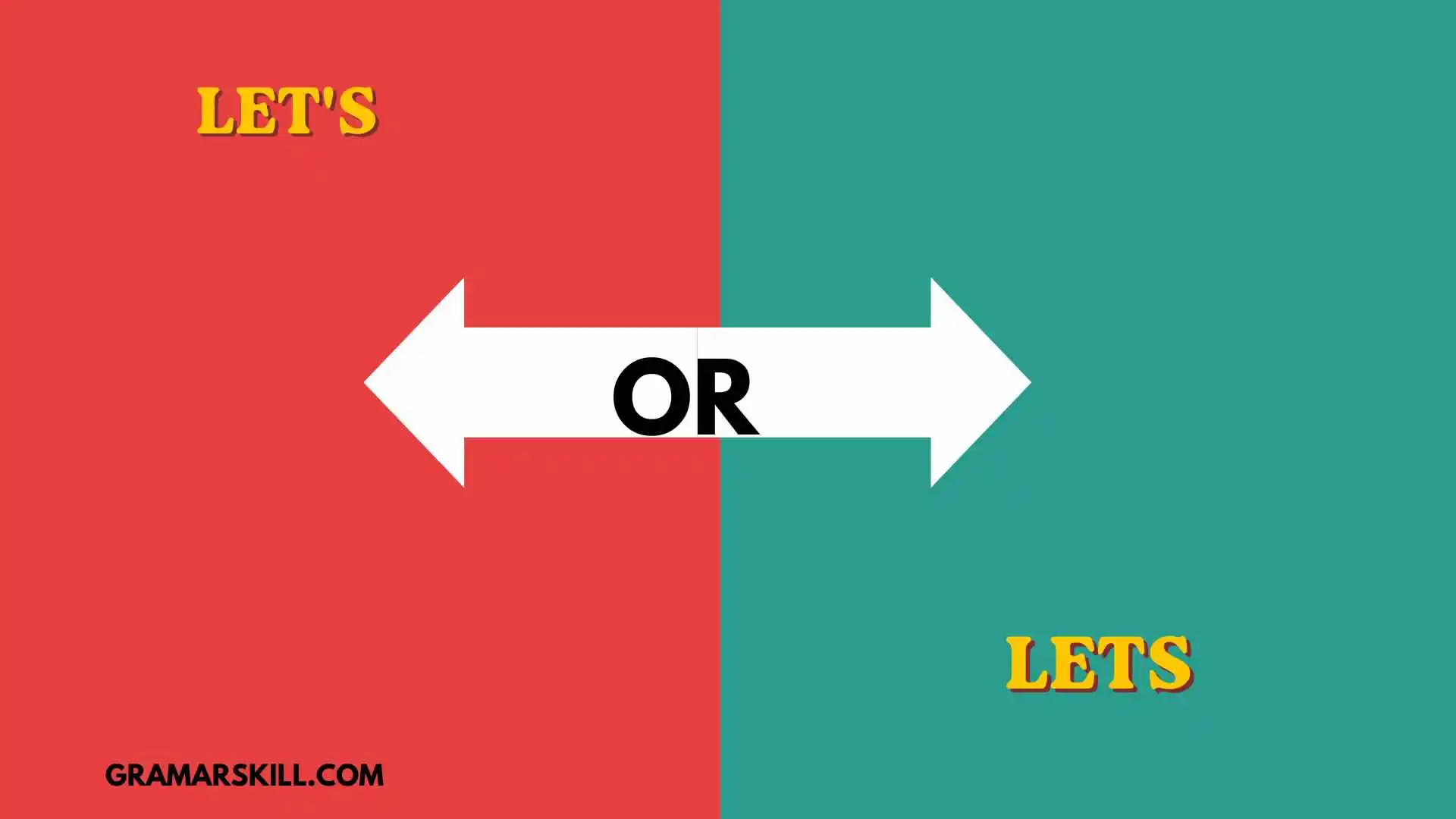
English is full of words that sound alike but carry different meanings, and one of the most confusing pairs for learners is “let’s” vs “lets.” Even native speakers occasionally make mistakes with these words, especially in writing. The confusion usually arises because they sound almost identical, but their meanings and grammatical functions are completely different.
Understanding the correct use of “let’s” and “lets” is crucial for both British and American English speakers. Using the wrong form in your writing or speech can change the meaning of a sentence entirely. For example, writing “He let’s go” instead of “He lets go” is considered grammatically incorrect. Similarly, using “lets” instead of “let’s” in an invitation can make your sentence confusing.
In this article, we will break down these two forms clearly, provide practical examples for both UK and US English, highlight common mistakes, and give tips to remember the correct usage. Whether you are a student, professional, or just someone looking to improve your writing, this guide will make the difference between confident, correct English and potentially confusing mistakes.
Quick Answer
“Let’s” is a contraction of “let us” and is used to make suggestions, offers, or invitations. For example, “Let’s go to the park” means “Let us go to the park.”
“Lets” is the third-person singular form of the verb “let”, meaning to allow or permit. For example, “He lets his dog play outside” means “He allows his dog to play outside.”
In short:
- Use “let’s” when you mean “let us” (suggestions).
- Use “lets” when someone allows something (he/she/it).
Meaning of the Correct Form: “Let’s”
“Let’s” is a contraction of “let us.” It is almost always used in suggestions or invitations. It is inclusive, meaning the speaker is including themselves in the action.
Examples in British and American English:
UK English:
- Let’s have a cup of tea before we leave.
- Let’s meet at the station at 5 pm.
US English:
- Let’s grab some coffee this afternoon.
- Let’s go watch the football game tonight.
Key Points:
- Always include yourself in the action.
- Often used with verbs in their base form (go, eat, meet, watch).
- Polite and friendly tone, common in both formal and informal contexts.
Meaning of the Incorrect Form: “Lets”
“Lets” is the third-person singular present form of the verb “let”, meaning to allow or permit. It does not include the speaker and is used to describe someone else giving permission.
Examples in British and American English:
UK English:
- She lets her children play outside after school.
- The teacher lets us leave early on Fridays.
US English:
- He lets his employees work from home twice a week.
- The apartment lets pets under 20 pounds.
Key Points:
- Never use “lets” when making a suggestion.
- Always refer to he, she, or it (third-person singular).
- Can indicate formal or casual permission depending on context.
Keyword Comparison / Key Differences
| Feature | Let’s | Lets |
| Meaning | “Let us” – used for suggestions or invitations | Allows or permits – third-person singular of “let” |
| Usage | Inclusive – speaker + others | Describes someone else allowing or permitting |
| Example (UK) | Let’s take a walk in the park. | She lets her kids watch TV after homework. |
| Example (US) | Let’s try that new restaurant. | He lets his dog sleep on the couch. |
| Common Mistake | Writing lets instead of let’s in a suggestion | Using let’s to describe permission |
UK vs US English:
There is no major difference in meaning between UK and US English for these words, but the choice of context can differ. For instance:
- UK: Let’s have a pint after work.
- US: Let’s grab a beer after work.
The word “pint” vs “beer” is a cultural difference, but “let’s” works the same way in both countries.
Common Mistakes People Make
- Using “lets” instead of “let’s” for suggestions
- ❌ Lets go to the cinema tonight.
- ✅ Let’s go to the cinema tonight.
- Using “let’s” when permission is meant
- ❌ Let’s him play outside.
- ✅ He lets him play outside.
- Confusing context with informal text
- Text messaging sometimes drops apostrophes (lets go). Always remember: formal writing needs the correct form.
- Mixing UK and US spelling differences
- While let’s and lets are spelled the same in both versions, other surrounding words may differ. Example:
- UK: Let’s organise a meeting.
- US: Let’s organize a meeting.
- While let’s and lets are spelled the same in both versions, other surrounding words may differ. Example:
- Omitting the apostrophe entirely
- ❌ Lets have fun at the party.
- ✅ Let’s have fun at the party.
Correct Usage in Sentences
Here are practical examples for both UK and US English to make it crystal clear:
UK English Examples:
- Let’s visit London Eye this weekend.
- She lets her children play football in the garden.
- Let’s not forget to bring the umbrella; it might rain.
- He lets his dog roam freely in the backyard.
- Let’s prepare some scones for the afternoon tea.
US English Examples:
- Let’s go to Times Square tomorrow.
- He lets his kids watch cartoons on weekends.
- Let’s grab some burgers after work.
- She lets her students choose their own topics.
- Let’s take a road trip across California.
Tips to Remember the Correct Usage
- Apostrophe Matters: If you’re making a suggestion, it’s “let’s” with an apostrophe.
- Check Subject: If someone else is allowing or permitting, it’s “lets” (he, she, it).
- Think “Let us” = Suggestion: If you can replace it with “let us” and it makes sense, use let’s.
- Third-Person Rule: If the subject is he, she, or it, you almost always need lets.
- Mnemonic Trick:
- Let’s = Let us (includes you)
- Lets = He/She/It allows
FAQs About [let’s or lets]
1. Can I use “lets” instead of “let’s”?
No. Using lets for suggestions is grammatically incorrect. Use let’s when making a suggestion.
2. Is “let’s” informal or formal?
It is acceptable in both formal and informal writing, but overusing contractions in formal documents can sometimes appear too casual.
3. Can “lets” be used for plural subjects?
No. Lets is only third-person singular. For plural, use let. Example: They let their children play outside.
4. Do UK and US English use these words differently?
The usage is the same, but spelling of other words might differ (organise vs organize).
5. Is it okay to drop the apostrophe in casual writing?
In informal texts or social media, dropping it is common, but it is incorrect in formal writing.
6. How can I quickly identify the correct word?
Ask yourself: “Am I including myself in the suggestion?” If yes → let’s. If describing someone allowing something → lets.
7. Can “lets” ever have a different meaning?
Yes, in real estate, “lets” can refer to renting property. Example: The agent lets apartments in London.
Conclusion
The difference between “let’s” and “lets” may seem subtle at first, but it is crucial for correct English usage. Remember:
- Let’s = Let us → suggestions and invitations
- Lets = allows → permission by he, she, or it
Mastering this small but important distinction can improve your writing, speaking, and overall confidence in English, whether in the UK or the US. Always pay attention to context, use the apostrophe correctly, and practice with examples.
READ MORE ARTICLES..
Girlies or Girlys: Differences, Definitions, and Examples 2026
led to or lead to: what’s the difference & usage? 2026
Kick Off or Kick-Off: what’s the difference & usage? 2026
innie or outie: What’s the difference & usage?

I’m Henry Collins, a passionate grammar enthusiast who loves making English simple and clear for everyone. I enjoy breaking down tricky grammar rules into easy, everyday language. Through my writing, I aim to help learners build confidence and write with accuracy. My goal is to turn confusion into clarity one word at a time.