If you’ve ever paused while writing and wondered whether to use “behaviour” or “behavior,” you’re not alone. This is one of the most common spelling confusions in English, especially for writers, students, and bloggers who target a global audience. At first glance, both words look almost identical, but that one extra letter “u” makes all the difference.
The confusion mainly comes from the differences between British English (UK) and American English (US). While both versions of English share the same roots, they have evolved over time, leading to variations in spelling, grammar, and usage. Therefore, understanding when and where to use each spelling is essential for clear and professional communication.
In today’s digital world, where content reaches readers worldwide, using the correct form can improve your credibility, SEO performance, and readability. So, let’s break it down in a simple and friendly way.
Quick Answer
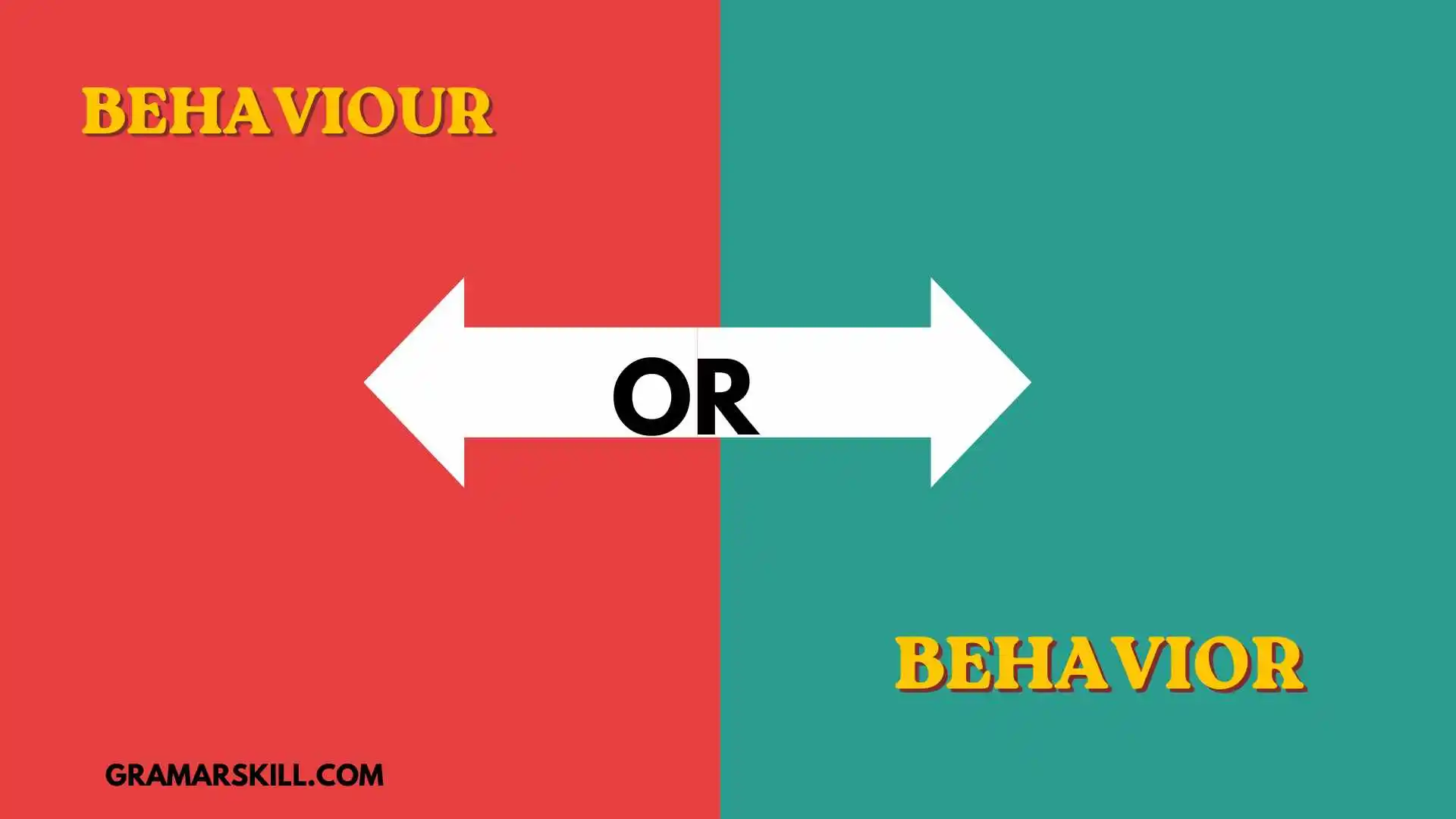
Both “behaviour” and “behavior” are correct spellings of the same word. The difference depends on the version of English you are using:
- Behaviour → Used in British English (UK)
- Behavior → Used in American English (US)
They have the same meaning and pronunciation. The only difference is spelling based on regional preference.
Meaning of the Correct Form
The word “behaviour/behavior” refers to the way a person, animal, or thing acts or responds in a particular situation.
Simple Definition:
Behaviour/Behavior = The way someone or something acts
Examples in British English (UK):
- His behaviour at school has improved a lot.
- The teacher praised her good behaviour.
- Animal behaviour is studied in biology.
Examples in American English (US):
- His behavior at school has improved a lot.
- The teacher praised her good behavior.
- Animal behavior is studied in science.
👉 As you can see, the meaning is exactly the same. Only the spelling changes depending on the audience.
Meaning of the Incorrect Form (if any)
Here’s the important point:
👉 Neither “behaviour” nor “behavior” is incorrect.
However, using the wrong version for your audience can feel incorrect or unprofessional.
Examples of “Incorrect” Usage (Context-Based):
- Writing “behavior” in a UK academic paper ❌
- Writing “behaviour” in a US business email ❌
So, while both spellings are correct, using the wrong one in the wrong region may confuse readers or appear inconsistent.
Keyword Comparison / Key Differences

Let’s compare both forms clearly:
| Feature | Behaviour (UK) 🇬🇧 | Behavior (US) 🇺🇸 |
| Spelling Style | Includes “u” | No “u” |
| Region Used | UK, Australia, Canada (sometimes) | USA |
| Meaning | Same | Same |
| Pronunciation | Same | Same |
| Formal Usage | British writing | American writing |
Why the Difference Exists
The difference comes from historical spelling reforms. American English simplified many words by removing extra letters.
👉 Examples:
- Colour (UK) → Color (US)
- Favourite (UK) → Favorite (US)
- Behaviour (UK) → Behavior (US)
Therefore, this pattern is consistent across many English words.
Common Mistakes People Make
Even though the difference is simple, many people still make mistakes. Let’s look at the most common ones:
1. Mixing Both Spellings in One Article
❌ Example:
- His behaviour is good, but sometimes his behavior changes.
✔️ Correct:
- Stick to one style:
- UK: behaviour, colour, favourite
- US: behavior, color, favorite
2. Not Knowing Your Audience
❌ Writing US spelling for UK readers
✔️ Tip:
- Use behaviour for UK audience
- Use behavior for US audience
3. Ignoring SEO Impact
If your audience is American but you use “behaviour,” your content might not rank as well.
✔️ Example:
- US SEO keyword: child behavior tips
- UK SEO keyword: child behaviour tips
4. Assuming One is More “Correct”
Many learners think one spelling is better.
👉 Truth: Both are correct just region-specific.
5. Forgetting Style Consistency
Switching between styles makes writing look unprofessional.
✔️ Always choose:
- British English OR
- American English
Correct Usage in Sentences
Here are real-life examples to help you understand better:
Daily Life Examples (UK):
- Good behaviour is rewarded in school.
- His rude behaviour upset everyone.
- Children learn behaviour from their parents.
Daily Life Examples (US):
- Good behavior is rewarded in school.
- His rude behavior upset everyone.
- Children learn behavior from their parents.
Professional Examples (UK):
- Employee behaviour affects company culture.
- Customer behaviour is changing rapidly.
Professional Examples (US):
- Employee behavior affects company culture.
- Customer behavior is changing rapidly.
Academic Examples (UK):
- Human behaviour is studied in psychology.
Academic Examples (US):
- Human behavior is studied in psychology.
Tips to Remember the Correct Usage
Here are some easy tricks to remember:
1 Tip: Think of “U” for UK
- Behaviour → U = UK
2 Tip: US is Shorter
- American English prefers shorter spellings
- So: behavior (no “u”)
3 Tip: Follow the Pattern
If you use:
- Colour → Behaviour
- Color → Behavior
4 Tip: Know Your Audience
Always ask:
👉 Who will read my content?
5 Tip: Use Writing Tools
Tools like Grammarly can help detect consistency issues.
FAQs
1. Is “behaviour” or “behavior” correct?
Both are correct. “Behaviour” is British English, while “behavior” is American English.
2. Which spelling should I use for SEO?
It depends on your target audience:
- UK audience → behaviour
- US audience → behavior
3. Do they have different meanings?
No, both words have the same meaning.
4. Which spelling is more common worldwide?
“Behavior” is more common globally due to American influence, but “behaviour” is widely used in the UK and other regions.
5. Can I use both in one article?
No, it’s better to stay consistent with one style.
6. Why does British English use “u”?
British English keeps traditional spellings, while American English simplifies them.
7. Is it wrong to use the other version?
Not wrong, but it may look unprofessional if used for the wrong audience.
Conclusion
To sum it up, the difference between “behaviour” and “behavior” is simple yet important. Both words mean the same thing, but their usage depends on whether you are following British English or American English.
Therefore, the key is not choosing which one is “correct,” but choosing the one that fits your audience. Consistency matters more than preference. If you’re writing for a UK audience, go with behaviour. On the other hand, if your audience is in the US, use behavior.
READ MORE ARTICLES..
License or Licence: What’s the difference & usage?
Fulfill or Fulfil: Which Spelling Should You Use? 2026
Whether or Not Synonym: What’s the Difference & usage? 2026
Thumb In vs Thumb Out: What’s the difference & usage

I’m Daniel Brooks, a passionate grammar enthusiast dedicated to making English simple and clear for everyone. I love breaking down confusing rules into easy, practical explanations you can actually use. Through my content, I aim to help learners write with confidence and accuracy. I believe good grammar isn’t about perfection it’s about clear communication.