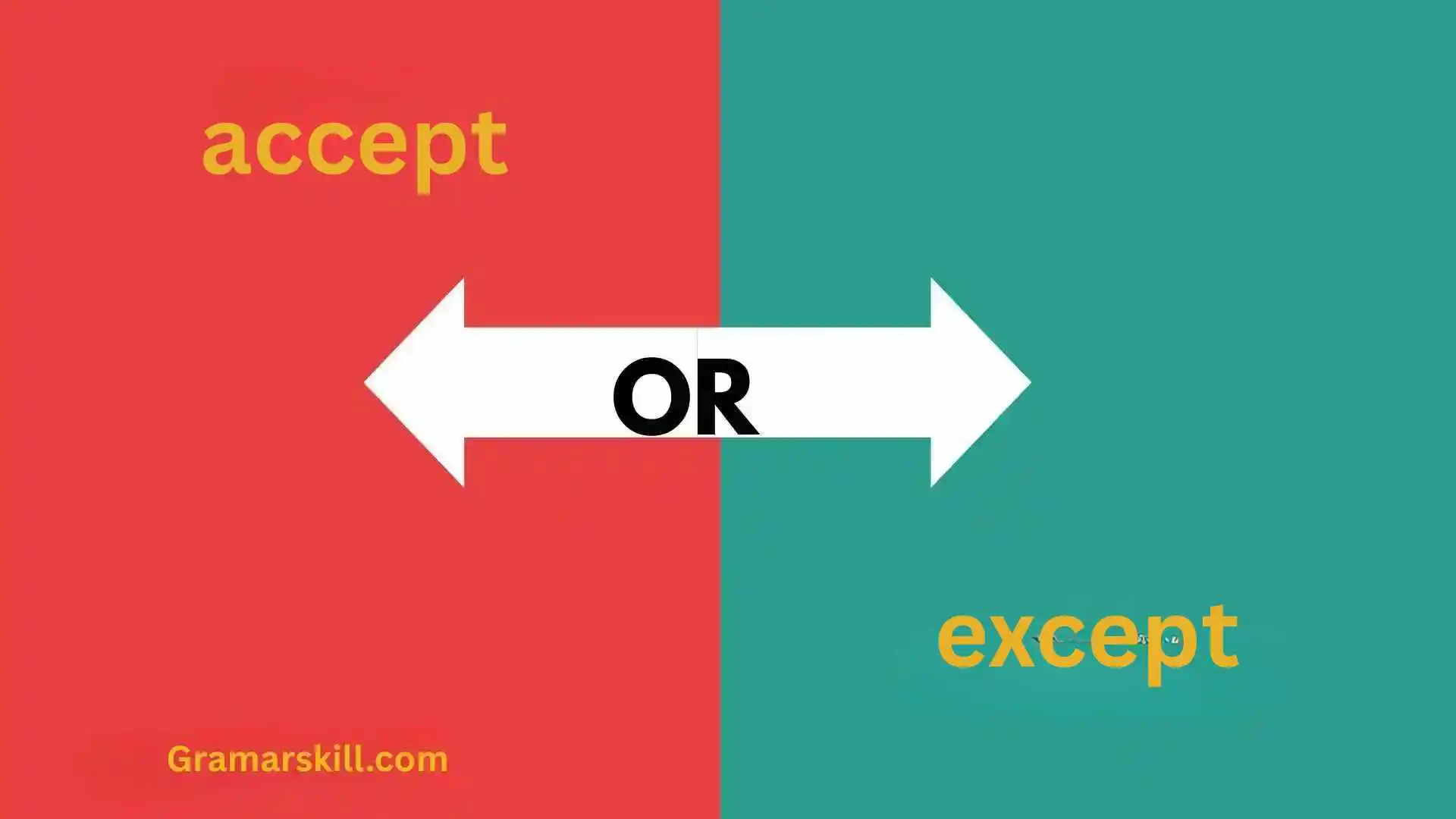
Have you ever wondered whether to use “accept” or “except” in a sentence? If so, you’re not alone. These two words often confuse writers and speakers because they sound similar, but their meanings are completely different. Using the wrong word can change the meaning of your sentence entirely, leading to misunderstandings or even embarrassment in professional and casual contexts.
Understanding the difference is crucial for both UK and US English readers. While the meaning remains largely the same in both dialects, slight spelling or usage conventions may vary. Whether you’re writing an essay, sending an email, or chatting with friends, knowing when to use each word ensures clarity and accuracy.
In this article, we’ll break down the differences, common mistakes, and correct usage of “accept” and “except” with plenty of examples for both UK and US English. By the end, you’ll feel confident choosing the right word every time.
Quick Answer
- Accept = to receive willingly or agree to something.
Example: I accept your invitation to the party. - Except = excluding or leaving out.
Example: Everyone attended the meeting except John.
If you’re in a hurry, remember: accept is about agreeing or receiving, except is about excluding.
Meaning of the Correct Form
Accept
Definition:
“Accept” is a verb that means to receive something willingly, agree to something, or approve.
Examples in US English:
- I accept your apology.
- She accepted the job offer yesterday.
- Please accept my gift.
Examples in UK English:
- He accepted the invitation to the wedding.
- They will accept applications until Friday.
- We cannot accept late submissions.
Key Points:
- Always a verb.
- Involves consent, approval, or reception.
- Spelling is the same in both UK and US English.
Except
Definition:
“Except” can function as a preposition, conjunction, or verb (though rarely as a verb). Its main meaning is excluding or leaving out.
Examples in US English:
- Everyone passed the exam except Mary.
- We are open every day except Sunday.
- I like all fruits except bananas.
Examples in UK English:
- All students attended except Tom.
- The store is closed on Sundays, except on public holidays.
- She eats everything except seafood.
Key Points:
- Often a preposition or conjunction.
- Indicates exclusion.
- Same spelling and meaning in UK and US English.
Meaning of the Incorrect Form
Many people confuse these words because they sound similar. Here’s what happens when you mix them up:
Incorrect:
- I except your gift. (❌) – Should be “accept.”
- Everyone is invited, accept John. (❌) – Should be “except.”
Why It’s Wrong:
- Using except when you mean accept changes the sentence from receiving or agreeing to wrongly implying exclusion.
- Similarly, using accept instead of except mistakenly suggests consent instead of leaving someone or something out.
Keyword Comparison / Key Differences
| Feature | Accept | Except |
| Part of Speech | Verb | Preposition / Conjunction |
| Meaning | To receive, agree, or approve | To exclude or leave out |
| UK/US Spelling | Same in UK & US | Same in UK & US |
| Example (UK) | He accepted the invitation. | All attended except Tom. |
| Example (US) | She accepts the award. | Everyone passed except Mary. |
| Common Confusion | Often confused with “except” | Often confused with “accept” |
Tip:
If you can replace the word with “receive” or “agree,” use accept. If you can replace it with “excluding” or “apart from,” use except.
Common Mistakes People Make
- Swapping the words accidentally
- ❌ I except your offer. → ✅ I accept your offer.
- Using “accept” for exclusion
- ❌ Everyone is invited accept John. → ✅ Everyone is invited except John.
- Misplacing “except” in a sentence
- ❌ Except John, everyone is attending the party. (less common in spoken US English) → ✅ Everyone is attending the party except John.
- Overusing “except”
- ❌ I like all fruits except apples and except oranges. → ✅ I like all fruits except apples and oranges.
- Confusing in formal writing
- ❌ Please accept all students excepting the late applicants. → ✅ Please accept all students except the late applicants.
Correct Usage in Sentences
Examples for UK English
- I accept that I made a mistake.
- They accepted the terms and conditions without any objection.
- Everyone is invited to the wedding except James and Lily.
- We cannot accept applications after the deadline.
- All shops are open today, except the bakery.
Examples for US English
- She accepted the promotion at work.
- Please accept my sincere apologies.
- Everyone passed the test except John.
- We will accept new members until the end of March.
- I enjoy all sports except golf.
Quick Tip:
- Accept = I receive or agree.
- Except = Everyone but someone/something.
Tips to Remember the Correct Usage
- Mnemonic for Accept:
- A ccept = Consent or Comply.
- Mnemonic for Except:
- Except = Excluding (think X as “cross out”).
- Substitution Trick:
- Replace with “receive/agree” → accept
- Replace with “excluding/apart from” → except
- Visual Cue:
- Accept → Hands open to receive.
- Except → A circle with one thing outside (excluded).
- Read Aloud:
- Often hearing the sentence helps you decide which word makes sense.
FAQs About Accept or Except
Q1: Can “except” ever be used as a verb?
- Rarely, yes. It can mean “to exclude,” but this is very formal and uncommon in modern English.
Q2: Is there a spelling difference in UK and US English?
- No. Both words are spelled the same way in UK and US English.
Q3: Can “accept” ever mean “exclude”?
- No. Accept always implies receiving or agreeing. Use except for exclusion.
Q4: How do I remember which one to use?
- Use the mnemonic: Accept = receive, Except = exclude.
Q5: Can I use “except” at the beginning of a sentence?
- Yes, but it’s more formal. Usually better to place it mid-sentence: “Everyone attended except John.”
Q6: Are there common phrases with “accept”?
- Yes: accept an invitation, accept a challenge, accept responsibility, accept payment.
Q7: Are there common phrases with “except”?
- Yes: everyone except, all except, nothing except, no one except.
Conclusion
In summary, understanding the difference between accept and except is essential for clear communication in both UK and US English. Remember:
- Accept → to receive, agree, or approve.
- Except → to exclude or leave out.
By using the tips, mnemonics, and examples above, you can confidently use these words in your writing and speech. Practice regularly, read examples in both British and American English, and soon choosing the right word will become second nature.
READ MORE ARTICLES..
led to or lead to: what’s the difference & usage? 2026
Kick Off or Kick-Off: Meaning, Examples, and Usage Explained (2026)
innie or outie: What’s the difference & usage? 2026
vaccum or vacuum: What’s the difference & usage?