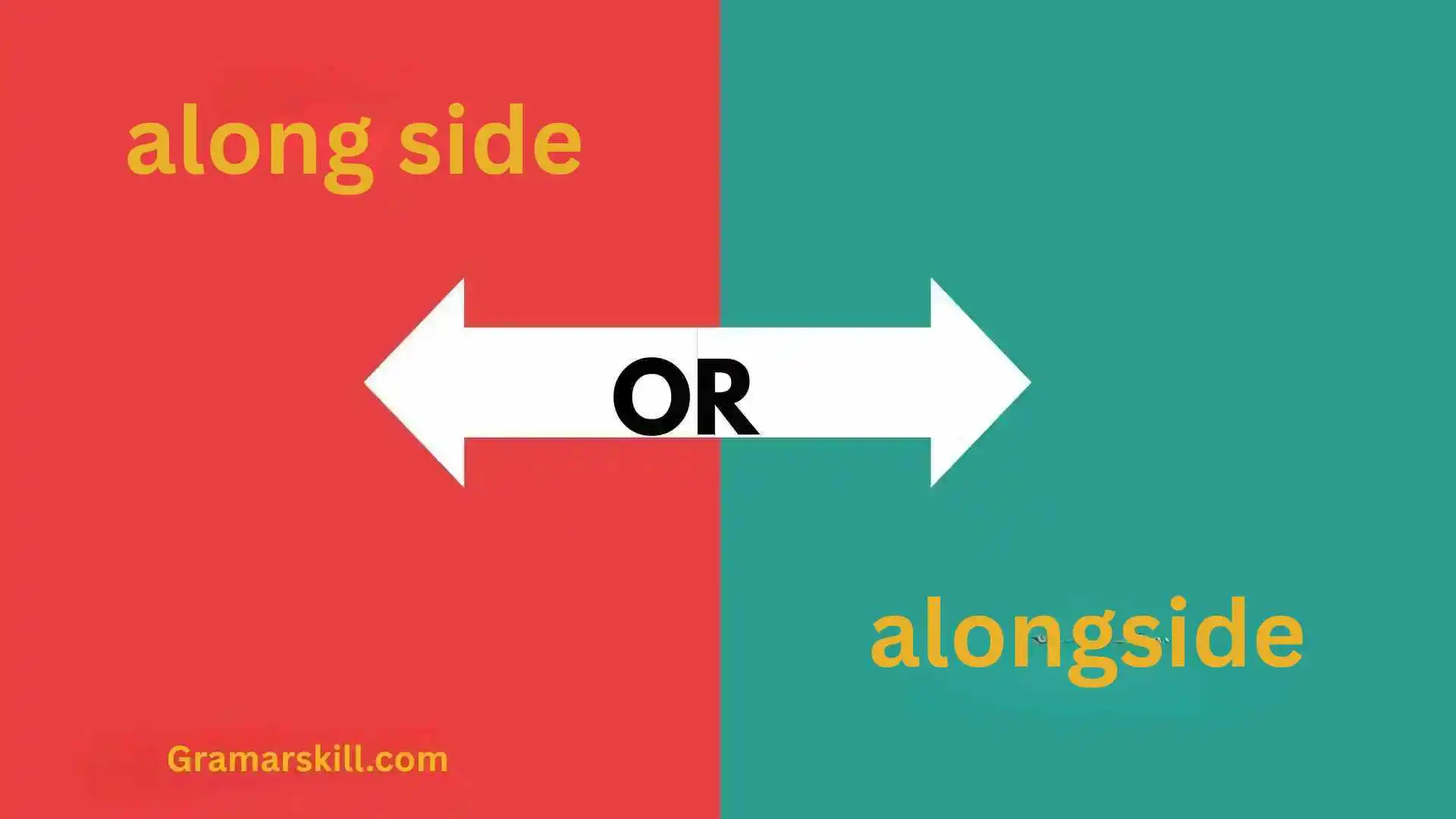
English can be tricky, especially when it comes to words that look similar but are used differently. One such case is the pair “along side” and “alongside.” Many writers and speakers often wonder which form is correct and whether the difference matters in British English or American English. Understanding this is crucial because using the wrong form can make your writing look unprofessional or confusing.
The confusion arises mainly because both terms appear similar and seem interchangeable at first glance. Some people even write “along side” as two words when they really mean the single-word “alongside.” This is especially common in informal writing, emails, or social media posts.
Getting this right is important not only for clarity but also for correctness in both UK and US English. While English spelling and usage sometimes vary between the two regions, in this case, there is a clear correct form recognized in both.
Quick Answer
The correct form is “alongside” (one word). It is used as a preposition or adverb to indicate “next to,” “together with,” or “in parallel to.”
The two-word form “along side” is considered incorrect in modern English and should be avoided.
For example:
- Correct: The new park runs alongside the river.
- Incorrect: The new park runs along side the river.
By remembering this simple rule, you can ensure your writing is polished, professional, and understood by both UK and US readers.
Meaning of the Correct Form
“Alongside” is used to indicate proximity, partnership, or simultaneous occurrence. It functions mainly as a preposition or adverb.
1. As a Preposition
It shows something is next to or beside something else.
Examples (UK & US English):
- The cyclist rode alongside the car.
- The soldiers stood alongside their commander.
- The new café is located alongside the bookstore.
Notice that in all these examples, “alongside” conveys the sense of position or proximity.
2. To Indicate Cooperation or Partnership
“Alongside” can also mean working together with someone or something.
Examples:
- The volunteers worked alongside local authorities to clean the park.
- She studied alongside her best friend to prepare for the exam.
- In the US, companies often work alongside nonprofits to support community projects.
3. To Express Simultaneous Occurrence
Sometimes, “alongside” suggests two things happening together.
Examples:
- Modern technology exists alongside traditional methods.
- The book explores history alongside contemporary events.
UK vs US Usage:
- In both UK and US English, “alongside” is the standard and correct form.
- There is no difference in meaning or spelling between British and American usage.
Meaning of the Incorrect Form
The two-word version “along side” is often used by mistake. Writers sometimes think they can split “alongside” into “along” + “side,” but this is not correct in modern English grammar.
Why “along side” is Wrong
- Grammatical Issue: “Along” and “side” cannot function together naturally in this context.
- Confusion: Readers may pause and wonder if “side” refers to a literal side of something, breaking the flow of reading.
- Not Recognized in Dictionaries: Most reputable dictionaries, including Oxford and Merriam-Webster, only list “alongside” as correct.
Incorrect Examples:
- She walked along side the river. ❌
- The new bridge was built along side the old one. ❌
Always remember: use “alongside” as one word.
Keyword Comparison / Key Differences
| Feature | Alongside (Correct) | Along Side (Incorrect) |
| Number of Words | 1 | 2 |
| Part of Speech | Preposition / Adverb | Incorrect form |
| Meaning | Next to, together with, in parallel | Confusing / unclear |
| UK English Usage | ✅ Standard | ❌ Not standard |
| US English Usage | ✅ Standard | ❌ Not standard |
| Example | He stood alongside his friend. | He stood along side his friend. ❌ |
Key Takeaway: “Alongside” is universally accepted in both UK and US English. “Along side” should never be used in formal or even informal writing.
Common Mistakes People Make
Even native speakers make mistakes when using “alongside.” Here are some typical errors:
- Splitting into two words:
- Incorrect: She placed the chairs along side the table. ❌
- Correct: She placed the chairs alongside the table. ✅
- Replacing it with “beside” unnecessarily:
- While “beside” is correct, some people mix it with “along side” incorrectly.
- Example: He stood beside his brother. ✅ vs He stood along side his brother. ❌
- Using it as a noun:
- Incorrect: The alongside of the river was crowded. ❌
- Correct: The path alongside the river was crowded. ✅
- Mixing British and American tendencies:
- In both regions, “alongside” is correct, but some UK learners mistakenly follow old spellings or informal usage that splits it.
Correct Usage in Sentences
Here are real-life examples to help both UK and US readers:
In Everyday Life
- The café is situated alongside the main street.
- She jogged alongside her dog every morning.
At Work or School
- The team worked alongside the management to complete the project.
- Students collaborated alongside teachers on the science fair.
In Literature or Media
- The novel depicts characters living alongside historical events.
- Documentary films often show humans alongside wildlife.
UK Examples
- The cyclist rode alongside the Thames.
- Volunteers worked alongside the council to restore the park.
US Examples
- The highway runs alongside the Mississippi River.
- Activists marched alongside local leaders in the demonstration.
Tips to Remember the Correct Usage
- One Word Only: Always remember, “alongside” is one word.
- Think Position or Partnership: If you mean next to something or working together, you’re likely using it correctly.
- Mnemonic Trick: “Along” + “side” together forms a single path or connection – imagine walking along a side path with someone.
- Avoid Splitting: If you feel tempted to write “along side,” pause and replace with “alongside.”
- Substitute Check: If unsure, see if “next to” or “together with” fits. If it does, alongside is correct.
FAQs
1. Can I use “along side” in British English?
No. Both UK and US English recognize only “alongside” as correct.
2. Is “alongside” a preposition or adverb?
It can be both, depending on context:
- Preposition: He walked alongside the river.
- Adverb: She stood alongside waiting.
3. Can “alongside” mean “together with”?
Yes. For example: Volunteers worked alongside doctors.
4. Are there any US vs UK spelling differences?
No. “Alongside” is the same in both UK and US English.
5. Can I shorten “alongside” to “along side” in casual writing?
It’s best to avoid this. Even in informal writing, the one-word form is correct.
6. Is “alongside” used in formal writing?
Absolutely. It is widely accepted in academic, business, and literary contexts.
7. How can I check if I’m using it correctly?
Substitute with “next to” or “together with.” If it works, your usage is correct.
Conclusion
Understanding the difference between “alongside” and “along side” is simple once you remember: one word, not two. Using the correct form ensures clarity, professionalism, and correctness in both UK and US English.
Key Takeaways:
- Correct: alongside ✅
- Incorrect: along side ❌
- Functions as a preposition or adverb
- Means next to, together with, or in parallel
READ MORE ARTICLES..
Pass or Past: Correct Meaning, Usage, and Examples in 2026
Hight or Height: Correct Spelling and Grammar Rules 2026
To Long or Too Long: Differences, Usage, and Tips 2026
Argentine or Argentinian: What’s the difference & usage? 2026