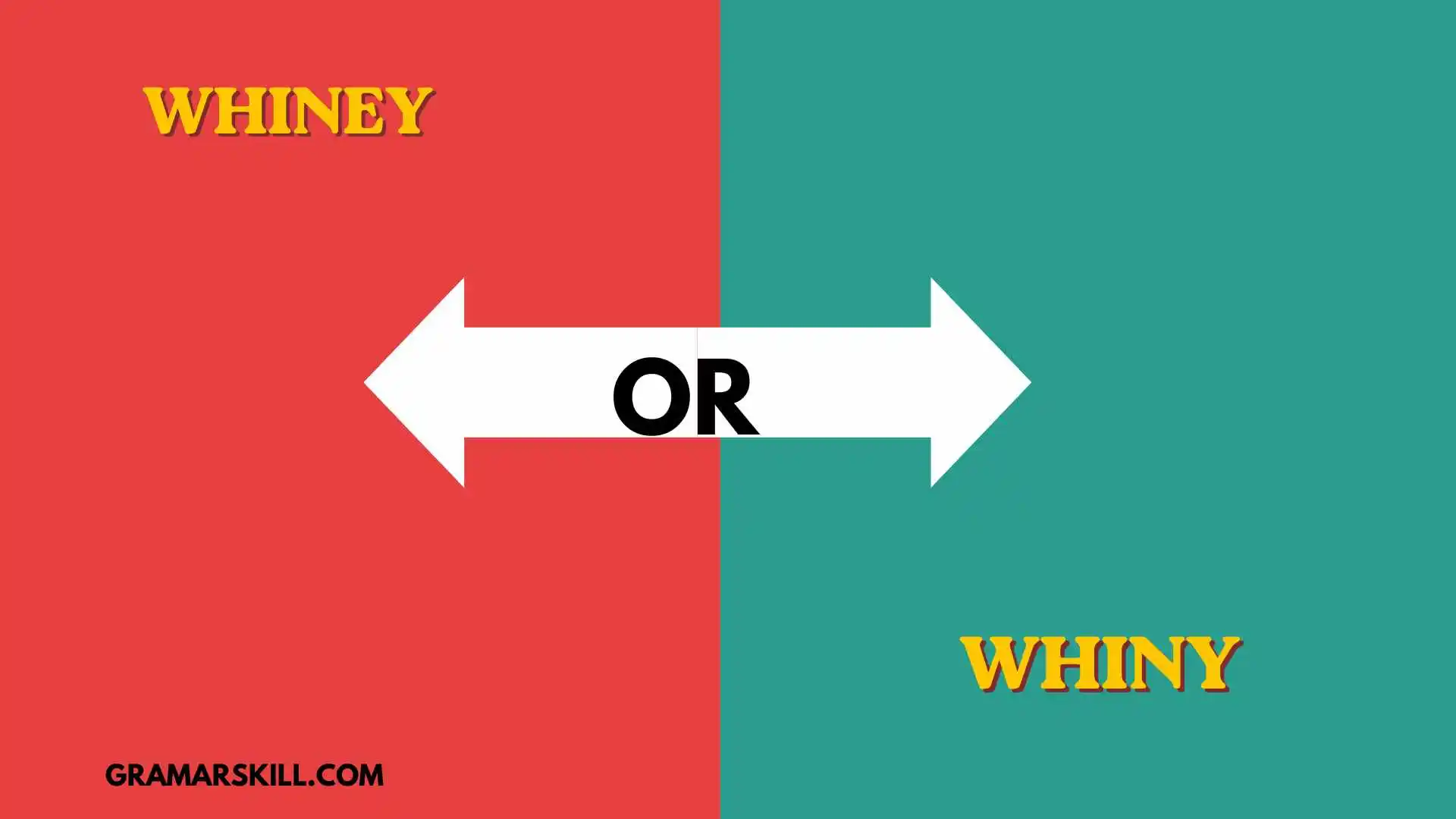
Have you ever wondered whether the correct spelling is “whiney” or “whiny”? Many English speakers, both in the UK and the US, struggle with this seemingly simple word. It appears often in informal writing, social media, and everyday conversations, but its spelling can be confusing. Some people think the word comes from “whine”, so they naturally add “-ey” at the end, while others drop the “e” entirely.
Understanding the correct spelling is not just about following grammar rules it’s about clear communication. Writing “whiney” instead of “whiny” can make your text appear careless or unpolished. Whether you’re sending a message to a friend, writing an article, or even posting on social media, knowing the proper form ensures your words convey the intended meaning.
In addition, the distinction between UK and US English can sometimes add to the confusion. While the word itself is universally understood, spelling conventions might differ slightly. This article will clear up all your doubts, give practical examples, and help you master the correct usage of whiny in any English context.
Quick Answer
The correct spelling is “whiny”, not “whiney.” The adjective whiny describes someone who complains too much or makes irritating, high-pitched complaints.
For example:
- Correct: “She is so whiny about every little thing.”
- Incorrect: “She is so whiney about every little thing.”
In both British and American English, whiny is universally accepted. The form “whiney” is considered a misspelling and should be avoided in formal writing.
Meaning of the Correct Form
The word whiny is an adjective derived from the verb “whine”, which means to complain or express discomfort in a high-pitched or irritating manner. When we describe someone as whiny, we are emphasizing that their complaining is excessive, annoying, or childish.
Examples in Sentences (UK & US English)
- UK English: “Stop being so whiny about the weather; it’s just rain.”
- US English: “He gets really whiny whenever he doesn’t get his way.”
Key Notes:
- Used for both children and adults, though often more commonly for children.
- Often carries a slightly negative or critical tone.
- Can describe behavior in professional, casual, or social settings.
Meaning of the Incorrect Form
Some people write “whiney”, thinking it mirrors the verb whine + “-ey.” While this might seem logical, it is not accepted in standard English.
Using whiney may confuse readers or make your writing appear less professional. Most style guides, dictionaries, and grammar references mark it as incorrect.
Incorrect Examples:
- “Stop being so whiney about homework.”
- “He sounded really whiney in the meeting.”
Correcting it to whiny instantly improves readability and clarity.
Keyword Comparison / Key Differences
Here’s a simple breakdown:
| Feature | Whiny (Correct) | Whiney (Incorrect) |
| Spelling | Whiny | Whiney |
| Part of Speech | Adjective | Adjective (incorrect usage) |
| Usage | Formal & informal English | Not recommended |
| UK English | ✅ Standard | ❌ Misspelling |
| US English | ✅ Standard | ❌ Misspelling |
| Meaning | Complaining excessively | Same meaning, but incorrect |
| Example | “She is whiny about her chores.” | “She is whiney about her chores.” |
Summary: Always use whiny. Think of it as “whine” + “y,” dropping the “e” from “whine.”
Whiny Pronunciation, Whiney or Whiny Examples, Whiney or Whiny Meaning, Whiney or Whiny Synonyms
| Topic | Information |
|---|---|
| Whiny Pronunciation | Whiny (WHY-nee) The word whiny is pronounced as WHY-nee (/ˈwaɪni/). |
| Whiney or Whiny Examples | Whiny (Correct): 1. The child became whiny after missing his nap. 2. Her whiny voice annoyed everyone in the room. Whiney is a less common variant spelling and is rarely used in modern English. |
| Whiney or Whiny Meaning | Whiny means complaining in an annoying, weak, or high-pitched way. It describes someone who frequently grumbles, complains, or sounds dissatisfied. Whiney is an alternative spelling, but whiny is the preferred and widely accepted form. |
| Whiney or Whiny Synonyms | Common synonyms of whiny include: complaining, grumbling, moaning, whining, fretful, peevish, nagging, grouchy, irritable, and dissatisfied. |
Common Mistakes People Make
Even native English speakers sometimes get confused. Here are the top mistakes:
- Adding an extra “e”
- ❌ Incorrect: “Stop being so whiney.”
- ✅ Correct: “Stop being so whiny.”
- Confusing with “winey” (which refers to wine flavor)
- ❌ Incorrect: “His attitude is winey.”
- ✅ Correct: “His attitude is whiny.”
- Overusing in professional writing
- While “whiny” is fine in casual contexts, in formal writing, consider alternatives like:
- Complaining
- Petulant
- Irritable
- While “whiny” is fine in casual contexts, in formal writing, consider alternatives like:
- Assuming UK and US spelling differ
- ✅ Both forms use whiny. The incorrect whiney is wrong in both versions.
Correct Usage in Sentences
Here are practical examples that illustrate proper usage in both UK and US English contexts:
UK English Examples
- “The children were whiny after staying indoors all day.”
- “He tends to get whiny during long meetings.”
- “Stop being so whiny; it’s just a small problem.”
- “Her whiny tone annoyed the whole team.”
US English Examples
- “My brother gets whiny when he’s hungry.”
- “The customer was being unnecessarily whiny about the service.”
- “She’s so whiny that everyone avoids her complaints.”
- “Even adults can sound whiny when stressed.”
Tip: Notice that the word is used exactly the same way in both regions.
Tips to Remember the Correct Usage
- Drop the “e”: Remember, whine → whiny. No extra “e” needed.
- Think childlike complaints: “Whiny” often evokes childish or irritating complaints.
- Mnemonic trick: “If it whines, it’s whiny, not whiney.”
- Check dictionaries: Both Oxford and Merriam-Webster confirm whiny as correct.
- Use alternatives in formal writing: petulant, complaining, fretful, irritable.
FAQs About [whiney or whiny]
1. Is “whiney” ever correct?
No, “whiney” is considered a misspelling in all standard English usage. Always use whiny.
2. Can adults be whiny?
Yes, “whiny” can describe both children and adults. Example: “Even adults can sound whiny when stressed.”
3. Does UK English use “whiney”?
No. Both UK and US English use whiny. “Whiney” is incorrect everywhere.
4. What is the origin of whiny?
It comes from the verb whine, which has meant “to complain or make a high-pitched sound” since the Middle English period.
5. Are there formal alternatives for whiny?
Yes. Words like petulant, complaining, irritable, and fretful can replace whiny in formal writing.
6. Can “whiny” describe tone or voice?
Absolutely. You can say: “She spoke in a whiny tone,” indicating a high-pitched, complaining style.
7. How do I remember the correct spelling?
Think: “whine” + “y” → drop the “e” and add “y” = whiny.
Conclusion
In summary, the correct spelling is whiny, not “whiney.” This adjective describes someone who complains excessively or irritatingly and is the same in both UK and US English. Remembering the spelling is simple if you associate it with the verb whine.
Avoid common mistakes like adding an unnecessary “e” or confusing it with “winey.” Use whiny in casual and everyday contexts, and consider formal alternatives for professional writing. By understanding the correct usage, you can communicate more clearly and avoid unnecessary spelling errors.
READ MORE ARTICLES..
pannel or panel: What is the difference & usage? 2026
is it a hour or an hour: What’s the difference & usage? 2026
Less or Equal to Sign in Math: Definition, Uses, and Tips 2026
When to Use Colon or Semi Colon with Easy Examples 2026

I’m Henry Collins, a passionate grammar enthusiast who loves making English simple and clear for everyone. I enjoy breaking down tricky grammar rules into easy, everyday language. Through my writing, I aim to help learners build confidence and write with accuracy. My goal is to turn confusion into clarity one word at a time.