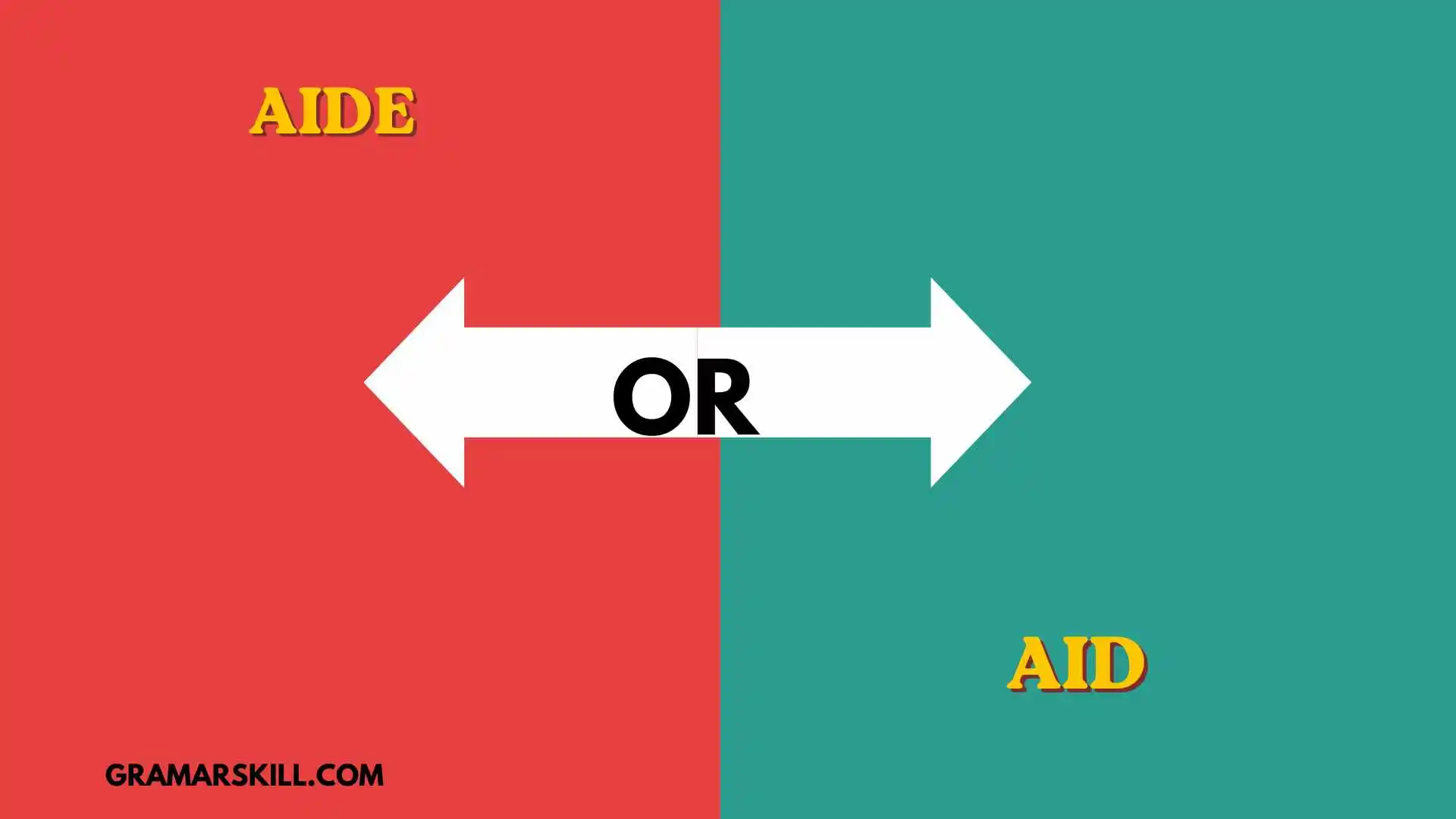
Have you ever wondered whether to write “aide” or “aid” in your sentence? This is a common confusion for writers, students, and professionals alike. Both words sound similar and are related to the concept of help, but they are not interchangeable. Using the wrong word can lead to misunderstandings or make your writing look unprofessional.
Understanding the difference is especially important for both UK and US audiences. While British and American English share many words, the nuances of usage, context, and spelling can vary. Knowing which form to use ensures your communication is clear, accurate, and culturally appropriate.
In this guide, we’ll break down the meanings of aide and aid, explore common mistakes, provide real-life examples, and give practical tips to remember the correct usage. Whether you’re writing a formal report, an academic paper, or casual communication, this article will help you choose the right word every time.
Quick Answer
Simply put: “aid” is a noun or verb meaning help or assistance, while “aide” is a noun referring to a person who assists someone, often in a professional or official capacity.
- Aid (noun/verb): “The government provided aid to flood victims.” / “Volunteers aided the older during the heatwave.”
- Aide (noun): “The senator’s aide prepared her speech notes.”
If you want a quick trick: think of aid as the action or help itself, and aide as the person providing help.
Meaning of the Correct Form
Aid
Definition: Aid is both a noun and a verb.
- As a noun: Help, support, or assistance.
- As a verb: To provide help or support.
Examples (UK & US):
- UK: The Red Cross provided aid to the hurricane victims.
- US: The government sent aid packages to families affected by the wildfire.
- Verb (UK): Volunteers aided in distributing food to the roofless.
- Verb (US): Doctors aided the injured during the tornado.
Notes:
- Always use aid when referring to help, relief, or support.
- It is uncountable when referring to general help (“aid is essential”), and countable when referring to specific forms of assistance (“medical aids”).
Aide
Definition: A person who assists someone, usually in a professional, official, or personal support role.
Examples (UK & US):
- UK: The Prime Minister’s aide briefed the press.
- US: The president’s aide managed the meeting schedule.
Notes:
- Always use aide to describe a person, never the act of helping.
- Common professions with aides include: teacher’s aide, nurse’s aide, political aide, etc.
Meaning of the Incorrect Form
Many people mistakenly use aide when they mean aid, or vice versa.
Incorrect Examples:
- ❌ “The volunteers provided an aide to the victims.” → should be aid
- ❌ “The senator needs more aid to manage her schedule.” → should be aide
Why It’s Wrong:
- Aid refers to help, not a person.
- Aide refers to a person, not the act of helping.
This mistake is common in both UK and US English, especially in professional and academic writing.
Keyword Comparison / Key Differences
| Feature | Aid | Aide |
| Part of Speech | Noun / Verb | Noun only |
| Meaning | Help, support, assistance | Person providing help |
| UK Usage | “Aid is given during disasters.” | “The MP’s aide prepared the speech.” |
| US Usage | “The government sent aid packages.” | “The president’s aide handled calls.” |
| Common Mistake | Using when referring to a person | Using when referring to help |
| Tip to Remember | Action / support → aid | Person → aide |
Transition Note: Therefore, remembering whether you are talking about help or a person will always guide you to the correct word.
Common Mistakes People Make
- Confusing the two in formal writing:
- ❌ “Aid prepared the documents.” → Incorrect
- ✅ “The aide prepared the documents.” → Correct
- Using “aide” to mean assistance:
- ❌ “The charity provided an aide to the refugees.” → Incorrect
- ✅ “The charity provided aid to the refugees.” → Correct
- Incorrect verb usage with “aide”:
- ❌ “The volunteers aided the victims, assisted by several aides.” → May be confusing
- ✅ “The volunteers aided the victims with the help of several aides.” → Correct
- Overcomplicating sentences:
- Keep it simple: “Aid helps people in need” vs. “An aide helps a person in need.”
- Ignoring UK/US differences:
- Both UK and US use these words similarly, but spelling and style guides may differ. For instance, British newspapers sometimes hyphenate “teacher’s aide” less frequently than American ones.
Correct Usage in Sentences
Aid (help, support)
- The UN provided aid to the earthquake survivors. (UK & US)
- Medical professionals aided the injured after the accident.
- Financial aid is available for students who cannot afford tuition.
- The organization is committed to aiding impoverished communities.
Aide (person helping)
- The mayor’s aide managed the press conference efficiently.
- Every teacher has a classroom aide to assist with students.
- The senator relied on his aide for drafting speeches.
- A personal aide helps the older people with daily tasks.
Tips for Real-Life Context:
- If you can replace the word with “help”, use aid.
- If you can replace it with “assistant”, use aide.
Tips to Remember the Correct Usage
- Mnemonic 1: Aide = Assistant (both start with ‘A’).
- Mnemonic 2: Aid = Assistance or Action (aid is the action of helping).
- Tip: Whenever in doubt, ask: Am I talking about help or a person helping?
Additional Tips:
- Always check your sentence for context: formal writing often distinguishes these carefully.
- Use dictionaries or grammar tools if unsure: they clearly differentiate between the two.
- Remember US & UK usage is mostly the same; differences are subtle and stylistic.
FAQs
1. Can I use “aide” and “aid” interchangeably?
No. Aid refers to help, while aide refers to a person providing help. Interchanging them is incorrect.
2. Is “teacher’s aide” used in both UK and US English?
Yes. In the US, it’s very common. In the UK, it may also be used, though “teaching assistant” is more common in schools.
3. Can “aid” be both countable and uncountable?
Yes. Uncountable: “Aid is essential.” Countable: “The government sent three different aids.”
4. How do I remember the difference easily?
Remember: aid = help (action), aide = assistant (person). A simple substitution trick works well.
5. Are there any regional spelling differences?
No significant spelling differences; both words are spelled the same in UK and US English. Differences are mainly in usage style.
6. Can “aid” be used as a verb in professional writing?
Absolutely. For example: “Volunteers aided the victims after the hurricane.”
7. Can “aide” refer to non-professional help?
Typically, aide is used in professional or formal contexts, like political or medical assistants. Casual helpers are usually not called aides.
Conclusion
In summary, understanding the difference between aid and aide is crucial for clear, professional, and accurate writing.
- Aid refers to help, support, or assistance (noun/verb).
- Aide refers to a person providing help, often in a professional capacity (noun).
By remembering simple mnemonics and paying attention to context, you can avoid common mistakes. Whether you are writing for a UK or US audience, these tips will ensure your sentences are precise, professional, and easy to understand.
READ MORE ARTICLES..
cced or cc’d: What’s the difference & usage? 2026
for sell or for sale: What’s the difference & usage?
funnier or more funny: What’s the difference & usage? 2026
a comparison using like or as: Difference & usage?

I’m Henry Collins, a passionate grammar enthusiast who loves making English simple and clear for everyone. I enjoy breaking down tricky grammar rules into easy, everyday language. Through my writing, I aim to help learners build confidence and write with accuracy. My goal is to turn confusion into clarity one word at a time.