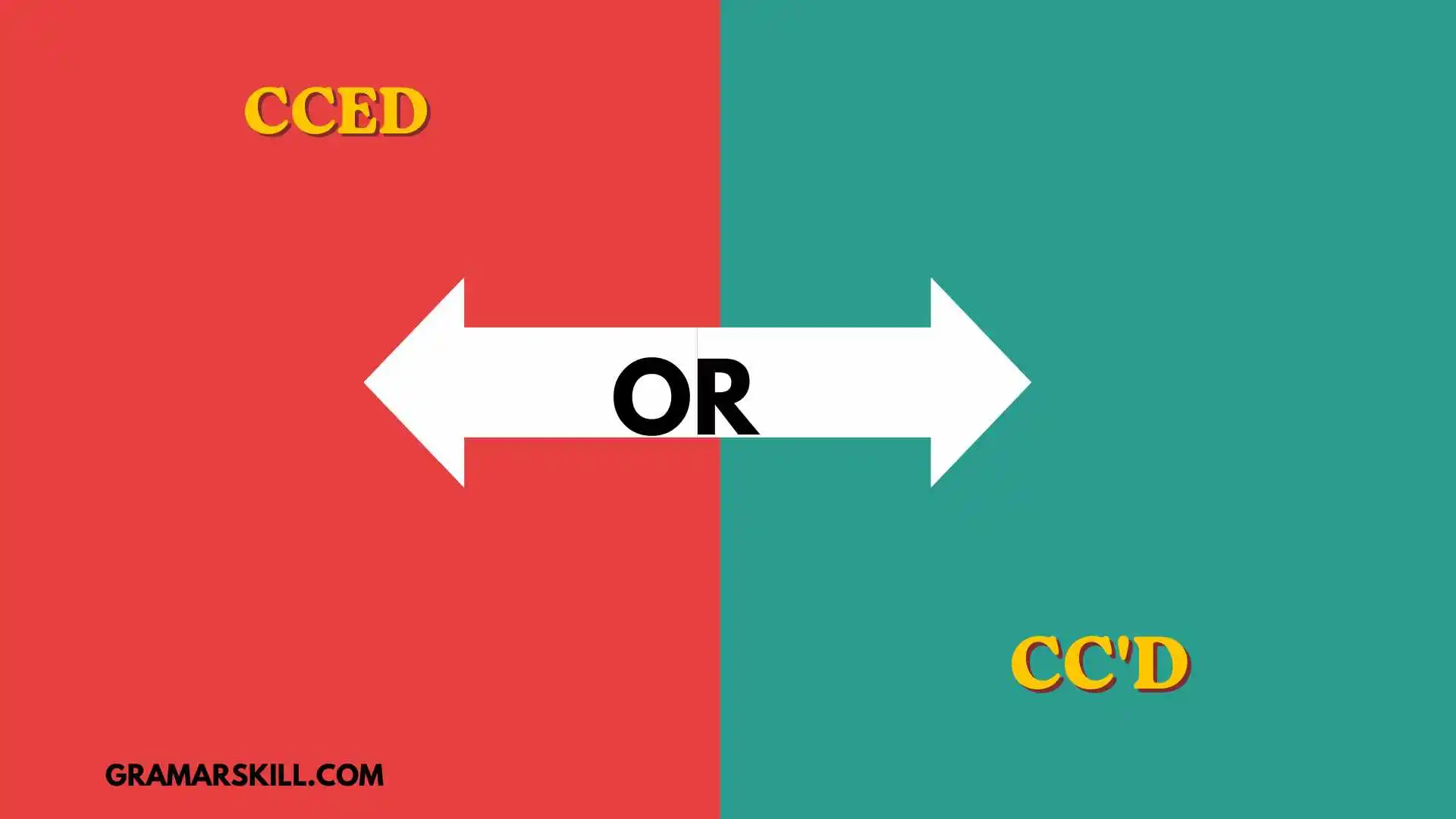
Emails are an essential part of professional and personal communication. However, even a small term like “cced” or “cc’d” can confuse many writers. Should you write “cced” without an apostrophe, or is “cc’d” correct? This question arises frequently because English rules and email etiquette sometimes seem contradictory.
Understanding the correct usage is important for both UK and US audiences, as slight differences in grammar and punctuation can affect clarity, professionalism, and even credibility. Whether you are sending a work email, a formal request, or just keeping colleagues informed, knowing how to write “cced” properly ensures your message is clear and understood.
In addition, with remote work and international communication, using the correct form avoids misunderstandings across borders. For example, in the US, “cc’d” is commonly accepted in informal emails, while in the UK, “cced” without an apostrophe is often preferred.
Quick Answer
The correct form is usually “cced”. It is the past tense of “CC” (carbon copy) in emails. While some people write “cc’d” with an apostrophe to indicate contraction, it is less formal and not necessary in standard writing.
Example:
- Correct: I cced John on the email.
- Less formal / alternative: I cc’d John on the email.
The main takeaway: use “cced” for professional writing, but “cc’d” is sometimes used informally, mostly in US English.
Meaning of the Correct Form
What Does “Cced” Mean?
“Cced” is the past tense of CC, which stands for carbon copy. Originally, CC referred to sending a copy of a physical letter to someone else. In modern emails, it means sending a copy of the email to additional recipients for their awareness.
Examples in Sentences:
US English:
- I cc’ed my manager on the project update.
- Sarah was cc’ed in the email chain regarding the budget.
UK English:
- I cced John on the meeting invite.
- Please ensure the finance team is cced on all correspondence.
Notice how in UK English, the apostrophe is generally omitted, whereas in US English, you might see “cc’ed” (or sometimes “cc’d”) in informal emails.
When to Use It
- When notifying someone without expecting direct action.
- To keep team members in the loop.
- In professional emails where transparency is important.
Meaning of the Incorrect Form (if any)
Common Mistakes
Some people mistakenly write:
- cc’d (with an apostrophe) – seen in informal US writing.
- cceed – doubling letters unnecessarily.
- c.c.ed – overcomplicating punctuation.
Why They Are Incorrect:
- English doesn’t require an apostrophe for past tense here.
- Adding extra letters or punctuation creates clutter and confusion.
Incorrect Example:
- ❌ I cceed you on the report.
- ❌ I c.c.ed John on this message.
Correct Form:
- ✅ I cced you on the report.
Keyword Comparison / Key Differences
| Feature | Cced | Cc’d |
| Formality | Formal, standard, professional | Informal, mostly US emails |
| Apostrophe | No apostrophe | Uses apostrophe to indicate contraction |
| UK Usage | Preferred | Rare |
| US Usage | Acceptable | Common in casual emails |
| Example | I cced the manager on the email. | I cc’d the manager on the email. |
Takeaway: “cced” is safer for professional communication, while “cc’d” is an informal variant mainly in American emails.
Common Mistakes People Make
- Using “cc’d” in formal emails – looks unprofessional in UK or international contexts.
- Overcomplicating past tense – writing “cceed” or “c.c.ed” is unnecessary.
- Confusing CC with BCC – CC is visible to all recipients, while BCC is hidden.
- Using lowercase “cced” in sentence beginnings – always capitalize if starting a sentence: Cced John on the update.
- Mixing UK & US conventions – be consistent depending on audience.
Examples:
- ❌ CC’d John on the invoice.
- ❌ cceed the client for reference.
- ✅ I cced John on the invoice.
Correct Usage in Sentences
For UK English:
- I cced the team on yesterday’s email.
- Make sure the HR department is cced on all recruitment correspondence.
For US English:
- I cc’d my manager on the client email.
- Sarah was cc’d on the update regarding the project timeline.
- Make sure all relevant stakeholders are cc’d on this thread.
- He was cc’d to stay informed about the changes.
- Please cc’d me on the email for reference.
Pro Tip: Even in the US, formal business emails still prefer “cced” over “cc’d” to maintain professionalism.
Tips to Remember the Correct Usage
- Think past tense: CC → Cced. No apostrophe is needed.
- Visual trick: The “ed” at the end already signals past tense.
- Consistency matters: Always use the same style in one email thread.
- UK vs US: When emailing British colleagues, omit the apostrophe. In casual US emails, “cc’d” may be acceptable.
- Mnemonic tip: “CCed keeps it simple, apostrophe-free.”
FAQs
1. Can I use “cc’d” in formal emails?
It’s better to use cced in formal emails. “Cc’d” is mostly informal and seen in casual US emails.
2. Why do some people use an apostrophe?
They treat “CC” like a verb and try to add an apostrophe to show past tense, similar to contractions like “didn’t.” However, it is unnecessary.
3. Is there a difference between CC and BCC?
Yes. CC (carbon copy) is visible to all recipients. BCC (blind carbon copy) hides recipients from each other.
4. Can I start a sentence with “Cced”?
Yes. Example: Cced the manager on the update. Capitalize it at the beginning of a sentence.
5. Is “cced” used in both UK and US English?
Yes, but the apostrophe-free form is preferred in the UK. In the US, informal writing may use “cc’d.”
6. How do I pronounce “cced”?
It’s pronounced like “seed” or “see-d,” sounding exactly like the letters C-C plus -ed.
7. Can I pluralize it?
No, “cced” is a verb. You wouldn’t say “two cceds.” Instead, you can say: I cced two colleagues on the email.
Conclusion
Understanding “cced” vs “cc’d” is simpler than it seems. The main rule: use “cced” without an apostrophe for professional, clear, and universally understood communication. While “cc’d” is occasionally seen in informal US emails, it is best avoided in formal or international correspondence.
Key Points to Remember:
- “Cced” is the correct past tense of CC.
- Avoid unnecessary apostrophes.
- Be consistent with UK or US style.
- Use it correctly to maintain professionalism and clarity.
READ MORE ARTICLES..
Plushy or Plushie: Which Term Is More Popular Today 2026
Skill Set or Skillset: Grammar Rules You Must Know for 2026
Eery or Eerie: Difference Explained in the Easiest Way 2026
Programing or Programming: Which One Should You Use? 2026