English can be tricky, especially when it comes to singular and plural forms, or when deciding whether to use an apostrophe. One common point of confusion is the difference between “babies” and “baby’s.” Many people, even native speakers, are unsure which form to use in writing. Using the wrong form can make your sentences unclear or grammatically incorrect.
Understanding this distinction is important for everyone whether you are writing for school, work, blogs, or social media. Moreover, it affects both UK and US English, as spelling may be consistent, but punctuation rules can sometimes create subtle differences.
In this guide, we’ll break down the differences, provide practical examples, explain common mistakes, and give you simple tips to remember which form is correct. By the end, you will feel confident using “babies” and “baby’s” in all contexts.
Quick Answer
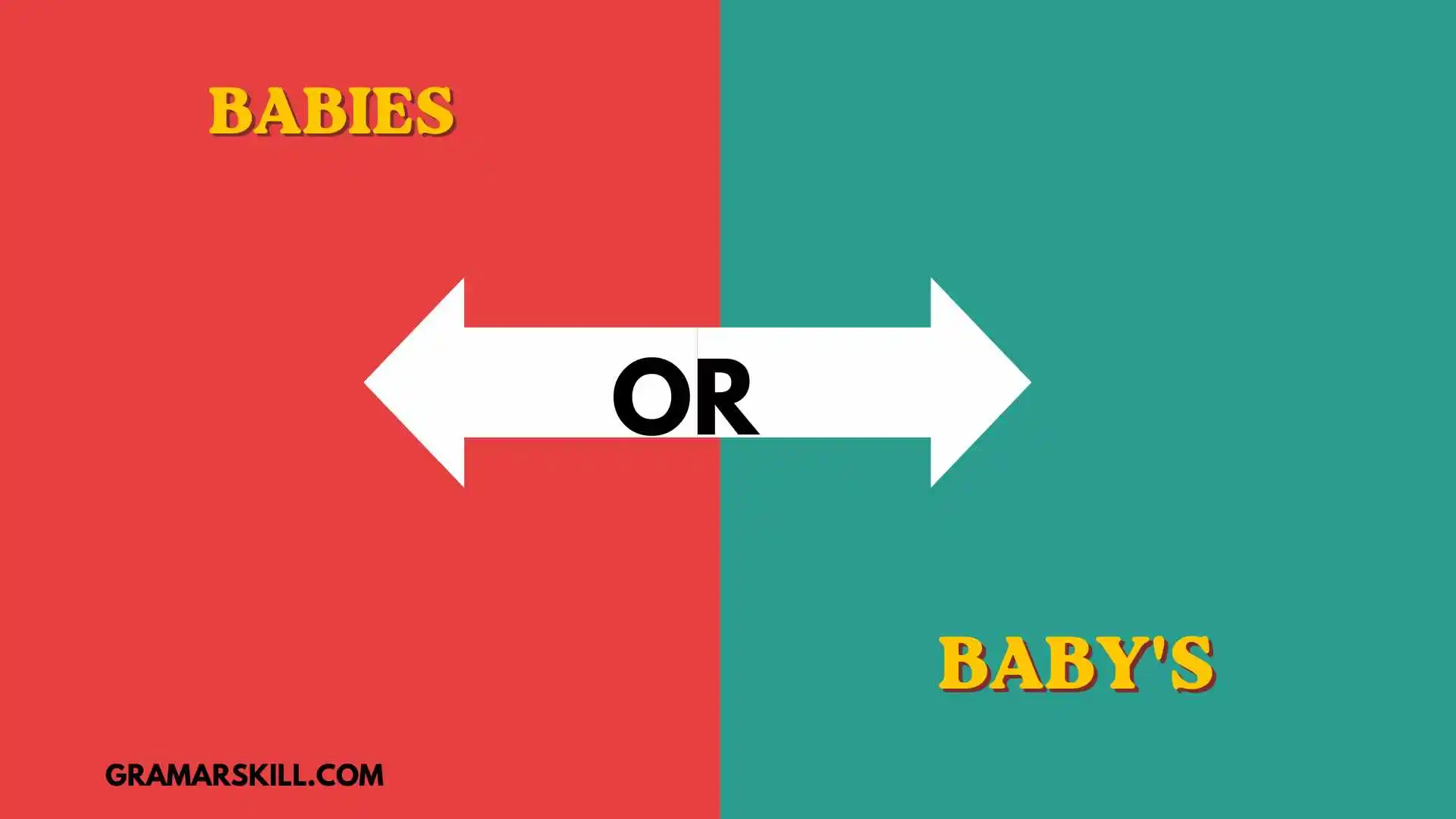
Babies is the plural form of baby, meaning more than one baby.
Baby’s is the singular possessive form of baby, meaning something belongs to one baby.
Example:
- Babies: “The babies are sleeping peacefully.”
- Baby’s: “The baby’s toy is on the floor.”
Meaning of the Correct Form
1. Babies (Plural)
Babies refers to more than one baby. It is simply the plural of the word baby.
Examples in US English:
- “The babies are playing in the nursery.”
- “All babies need proper care and attention.”
Examples in UK English:
- “The babies were wrapped in warm blankets.”
- “Babies often sleep for 16–18 hours a day.”
Tip: Anytime you mean two or more babies, use babies.
2. Baby’s (Singular Possessive)
Baby’s is used to show ownership or association with one baby. The apostrophe + “s” indicates that something belongs to the baby.
Examples in US English:
- “The baby’s bottle is on the table.”
- “I like the baby’s smile.”
Examples in UK English:
- “The baby’s cot is next to the window.”
- “Did you see the baby’s first steps?”
Tip: If you are talking about something that belongs to one baby, always use baby’s with an apostrophe.
Meaning of the Incorrect Form
A common mistake is using baby’s when you mean babies, or vice versa. This can confuse readers because the meaning changes entirely.
Examples of Mistakes:
- ❌ “The baby’s are sleeping.” → Incorrect, because “baby’s” implies possession, but here we need a plural.
- ❌ “The babies’s toy is broken.” → Incorrect, the apostrophe is unnecessary and misplaced.
Understanding the difference between plural and possessive singular is key to avoiding such errors.
Keyword Comparison / Key Differences
| Feature | Babies | Baby’s |
| Meaning | More than one baby | Belongs to one baby |
| Type | Plural | Singular possessive |
| Apostrophe | No | Yes |
| Example (US) | “The babies are happy.” | “The baby’s blanket is soft.” |
| Example (UK) | “Babies often wake early.” | “The baby’s pram is outside.” |
| Usage Tip | Use for multiple babies | Use for possession of one baby |
Transition note: However, it’s important to remember that plural possessive forms also exist. For example, babies’ (with the apostrophe after “s”) is used for multiple babies owning something.
Example: “The babies’ toys are scattered everywhere.”
Common Mistakes People Make
- Using baby’s instead of babies
- ❌ “All the baby’s are healthy.”
- ✅ “All the babies are healthy.”
- Confusing plural possessive
- ❌ “The baby’s toys are everywhere.” (if more than one baby)
- ✅ “The babies’ toys are everywhere.”
- Misplacing apostrophes
- ❌ “Babie’s are cute.” → Wrong spelling and apostrophe usage
- ✅ “Babies are cute.”
- Overusing baby’s
Some writers use baby’s in place of plural forms thinking it’s more affectionate or casual. This is grammatically incorrect.
Correct Usage in Sentences
Examples for US English
- “Babies need a lot of sleep.”
- “The baby’s diaper is wet.”
- “All babies enjoy cuddles from their parents.”
- “I love the baby’s laugh.”
- “The babies’ cribs are lined up in the nursery.”
Examples for UK English
- “Babies are often fed every three hours.”
- “The baby’s pram is parked outside.”
- “Babies love listening to lullabies.”
- “Did you notice the baby’s tiny shoes?”
- “The babies’ toys are neatly arranged on the shelf.”
Transition word tip: In addition to basic sentences, note that babies is often used with verbs like are, sleep, cry, while baby’s is used with nouns showing possession.
Tips to Remember the Correct Usage
- Think plural vs. possessive
- More than one → babies
- Belongs to one → baby’s
- Check for apostrophes
- If you see an apostrophe → check if it’s ownership.
- No apostrophe → likely plural.
- Mnemonic trick:
- Babies = Bunch of babies
- Baby’s = Belongs to one baby
- Read aloud
- Reading aloud helps identify if you are talking about multiple babies or something belonging to one.
- Plural possessive note
- If multiple babies own something → babies’.
- Example: “The babies’ toys are colorful.”
FAQs
1. Can I use baby’s for plural?
No, baby’s is singular possessive. For plural, use babies.
2. What is the plural possessive of babies?
It is babies’. Example: “The babies’ blankets are soft.”
3. Is there a difference between US and UK usage?
The rules for babies and baby’s are the same in both US and UK English. Differences are minor and mostly in spelling for other words.
4. How do I know if I need an apostrophe?
If you are showing ownership for one baby, use baby’s. Otherwise, for plural, skip the apostrophe.
5. Can “babies” ever have an apostrophe?
Yes, when showing possession for multiple babies: babies’. Example: “The babies’ shoes are all different colors.”
6. Is baby’s only used for nouns?
Yes, the possessive form baby’s is used to modify nouns that belong to a baby, like baby’s toy, baby’s room, etc.
7. Are contractions with baby’s common?
Yes, baby’s can also be a contraction for “baby is” or “baby has.” Context is important. Example: “The baby’s sleeping” = “The baby is sleeping.”
Conclusion
Understanding the difference between babies and baby’s is essential for clear and correct English writing. Remember:
- Babies = plural form, more than one baby
- Baby’s = singular possessive, belongs to one baby
In addition, keep an eye on apostrophes and consider plural possessives (babies’) when needed. By practicing these rules and using the examples above, you can confidently write for both UK and US audiences without errors.
READ MORE ARTICLES..
Too Late or To Late: What’s the difference & usage? 2026
Lying or Laying in Bed: What’s the difference & usage?
master’s or masters: What’s the difference & usage? 2026
blankie or blanky: What’s the difference & usage?

I’m Daniel Brooks, a passionate grammar enthusiast dedicated to making English simple and clear for everyone. I love breaking down confusing rules into easy, practical explanations you can actually use. Through my content, I aim to help learners write with confidence and accuracy. I believe good grammar isn’t about perfection it’s about clear communication.