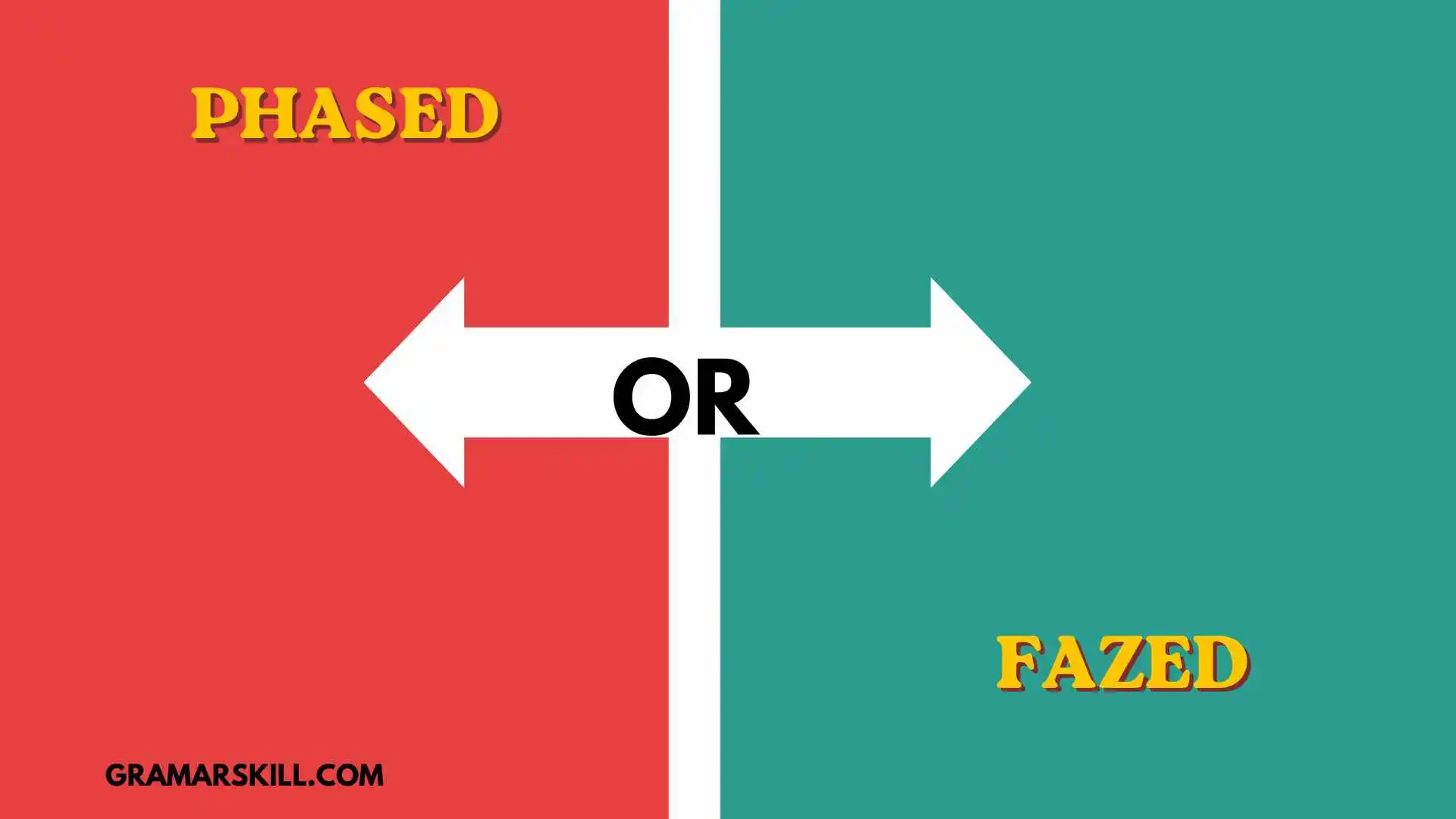
Many people get confused between the words “phased” and “fazed” because they sound similar, but their meanings are completely different. This confusion often leads to mistakes in writing, emails, and even casual conversations. Understanding the difference is essential for anyone learning English, whether you’re in the UK, the US, or elsewhere.
In both British and American English, using these words incorrectly can change the meaning of a sentence entirely. For example, saying “I was phased by the news” instead of “I was fazed by the news” would sound odd and incorrect to native speakers.
Knowing the correct word can improve your communication, make your writing look professional, and help you avoid misunderstandings. Let’s break down the meanings, differences, and correct usage of phased and fazed.
Quick Answer
In short:
- Phased → done in phases or steps (process-related).
- Fazed → affected emotionally or mentally (reaction-related).
Example:
- Correct: “The new system was phased in over six months.”
- Correct: “She wasn’t fazed by the criticism.”
Meaning of the Correct Form
Phased
The word phased is the past tense of phase, which means to implement or introduce something gradually in stages.
Examples in British English:
- “The new curriculum will be phased in over three years.”
- “The city plans to phase out old buses gradually.”
Examples in American English:
- “The software updates were phased in to avoid system downtime.”
- “The company phased out the old product line last year.”
In both UK and US English, phased is a formal, neutral term referring to a planned sequence.
Fazed
The word fazed comes from the verb faze, meaning to disturb, confuse, or disconcert someone. It’s usually about emotional reactions rather than processes.
Examples in British English:
- “He was not fazed by the long queue at the bank.”
- “The sudden storm didn’t faze her at all.”
Examples in American English:
- “I wasn’t fazed when they changed the meeting time.”
- “The criticism didn’t faze him one bit.”
Here, fazed is informal but widely accepted in both British and American English.
Meaning of the Incorrect Form (Common Mistakes)
Many learners accidentally swap phased and fazed, leading to confusing or incorrect sentences.
Common mistake examples:
- ❌ “The project was fazed in over six months.” → Incorrect, because a project cannot be emotionally disturbed.
- ❌ “She was phased by the rude comment.” → Incorrect, because phased refers to processes, not emotions.
Remember: One relates to processes (phased), the other to reactions (fazed).
Keyword Comparison / Key Differences

| Feature | Phased | Fazed |
| Part of speech | Verb (past tense of phase) | Verb (past tense of faze) |
| Meaning | Implemented gradually or in stages | Emotionally disturbed or affected |
| Context | Business, planning, technology | Emotional or psychological reaction |
| UK & US English usage | Same meaning in both | Same meaning in both |
| Example | “The changes were phased in.” | “He wasn’t fazed by the news.” |
Key Tip: If you’re talking about a process, use phased. If you’re talking about feelings or reactions, use fazed.
Phased or Fazed Grammar
| Heading | Information |
|---|---|
| Phased or Fazed Grammar | Phased and fazed are commonly confused because they sound alike, but they have different meanings. Phased relates to stages, plans, or gradual processes, while fazed means disturbed, bothered, or affected by something. Using the correct word depends on the context of the sentence. |
| Phased or Fazed Examples | Phased: “The company introduced the new policy in phased steps.” “The project was phased over several months.” Fazed: “She was not fazed by the difficult interview questions.” “He remained calm and unfazed during the emergency.” These examples show how each word is used in everyday English. |
| Phased or Fazed Synonym | Common synonyms for phased include staged, gradual, sequential, and step-by-step. Synonyms for fazed include disturbed, bothered, unsettled, shaken, and affected. Choosing a synonym depends on the tone and meaning you want to express. |
| Phased or Fazed UK | In UK English, phased and fazed have the same meanings and usage as in US English. The spelling does not change between British and American English. However, UK publications often use examples such as “a phased implementation” and “not fazed by criticism.” |
| Phased or Fazed Meaning | Phased means organized or carried out in separate stages over time. Fazed means emotionally affected, worried, or disturbed by an event or situation. Understanding this distinction helps avoid one of the most common homophone mistakes in English writing. |
Common Mistakes People Make
- Mixing sound with meaning:
Since “phased” and “fazed” sound similar, people often write one when they mean the other. - Overusing “phased” emotionally:
- ❌ “I was phased when my team lost.” → Correct: “I was fazed when my team lost.”
- Using “fazed” in formal planning:
- ❌ “The new policy was fazed in gradually.” → Correct: “The new policy was phased in gradually.”
- Neglecting UK/US spelling rules:
While “phased” and “fazed” themselves are consistent across UK and US English, surrounding vocabulary may differ:- UK: “The programme will be phased in.”
- US: “The program will be phased in.”
- Confusing past tense with adjective:
Some try to use fazed as an adjective without context:- ❌ “He looks very fazed about the new system.” → Technically correct but less formal; better: “He seems unfazed by the new system.”
Correct Usage in Sentences
Using “Phased”
Business / Work Context:
- “The company phased in the new software over six months.”
- “UK schools often phase in new assessment methods gradually.”
Government / Public Services:
- “The city council phased out single-use plastics over two years.”
- “US authorities phased in stricter traffic regulations.”
Technology / Projects:
- “British firms often phase in cybersecurity measures in stages.”
Using “Fazed”
Emotional / Personal Reactions:
- “She wasn’t fazed when the audience laughed at her speech.”
- “The long flight didn’t faze him at all.”
Challenges / Difficult Situations:
- “He remained calm and unfazed despite the pressure.”
- “US athletes are often trained to stay fazed-resistant during high-pressure games.”
Informal Conversations:
- “Don’t worry about the delay; I’m not fazed.”
- “UK teenagers often say they’re unfazed by minor failures.”
Tips to Remember the Correct Usage
- Think “Process” → Phased:
- If something happens in stages, like a project or plan, use phased.
- Think “Emotion” → Fazed:
- If something affects feelings or surprises someone, use fazed.
- Mnemonic Trick:
- Phased = Phase of time → stages.
- Fazed = F for Feeling → emotions.
- Check context:
- Ask yourself: “Is this about a step-by-step plan or about emotions?”
- UK vs US reminder:
- Word meaning is the same. Only surrounding spelling or vocabulary changes (e.g., programme/program, colour/color).
FAQs (Frequently Asked Questions)
Q1: Can “phased” be used emotionally?
A1: No. Phased relates only to gradual processes or stages. For emotional impact, use fazed.
Q2: Are “phased” and “fazed” pronounced differently?
A2: They sound very similar, which causes confusion. Listen carefully:
- Phased → /feɪzd/
- Fazed → /feɪzd/
Context usually helps distinguish meaning.
Q3: Can “fazed” be used in formal writing?
A3: It’s acceptable, especially in descriptive or narrative contexts, but in highly formal writing, alternatives like “disturbed” or “unaffected” are preferred.
Q4: Is there a UK vs US difference in usage?
A4: The meanings are the same in both UK and US English. Only small spelling or vocabulary differences may appear in surrounding words.
Q5: Can you use “phased in” as a phrasal verb?
A5: Yes. “Phased in” is very common in project planning, policy implementation, and technology deployment.
Q6: Is “fazed out” a correct phrase?
A6: No, “fazed out” is incorrect. Stick with “fazed by” or “not fazed.”
Q7: Are there synonyms to remember for each?
A7:
- Phased: implemented gradually, introduced in stages
- Fazed: disturbed, bothered, worried, intimidated
Conclusion
In summary, the words phased and fazed are often confused, but they have distinct meanings:
- Phased → gradual steps or processes.
- Fazed → emotional disturbance or reaction.
Remembering the context, using our mnemonic tricks, and paying attention to whether the sentence is about process or feeling can save you from common mistakes.
Always double-check your writing, especially if you’re aiming for professional communication or formal writing in the UK or US. By mastering phased and fazed, you’ll sound more confident, precise, and natural in English.
READ MORE ARTICLES..
Canon or Cannon: Meaning, Usage, and Grammar Rules 2026
Armour or Armor Meaning and Usage Guide
Say Your Peace or Piece: What’s the Correct Phrase? 2026
Unkempt or Unkept: Usage Rules, Tips, and Clear Examples 2026

I’m Daniel Brooks, a passionate grammar enthusiast dedicated to making English simple and clear for everyone. I love breaking down confusing rules into easy, practical explanations you can actually use. Through my content, I aim to help learners write with confidence and accuracy. I believe good grammar isn’t about perfection it’s about clear communication.