Many English learners and even native speakers often stumble over the words “canon” and “cannon.” Despite sounding almost identical, these two words have entirely different meanings and uses. Using the wrong one can change the meaning of your sentence and sometimes lead to confusion, especially in writing or formal communication.
Understanding the difference is particularly important for both UK and US audiences, as grammar and spelling conventions can slightly vary, though the meanings of these words remain largely the same. Whether you’re writing a school essay, publishing a blog, or composing creative fiction, knowing which term to use is crucial.
In this article, we will break down the meanings, differences, common mistakes, and correct usage of canon and cannon in a clear, beginner-friendly way. By the end, you’ll be confident in choosing the right word every time.
Quick Answer
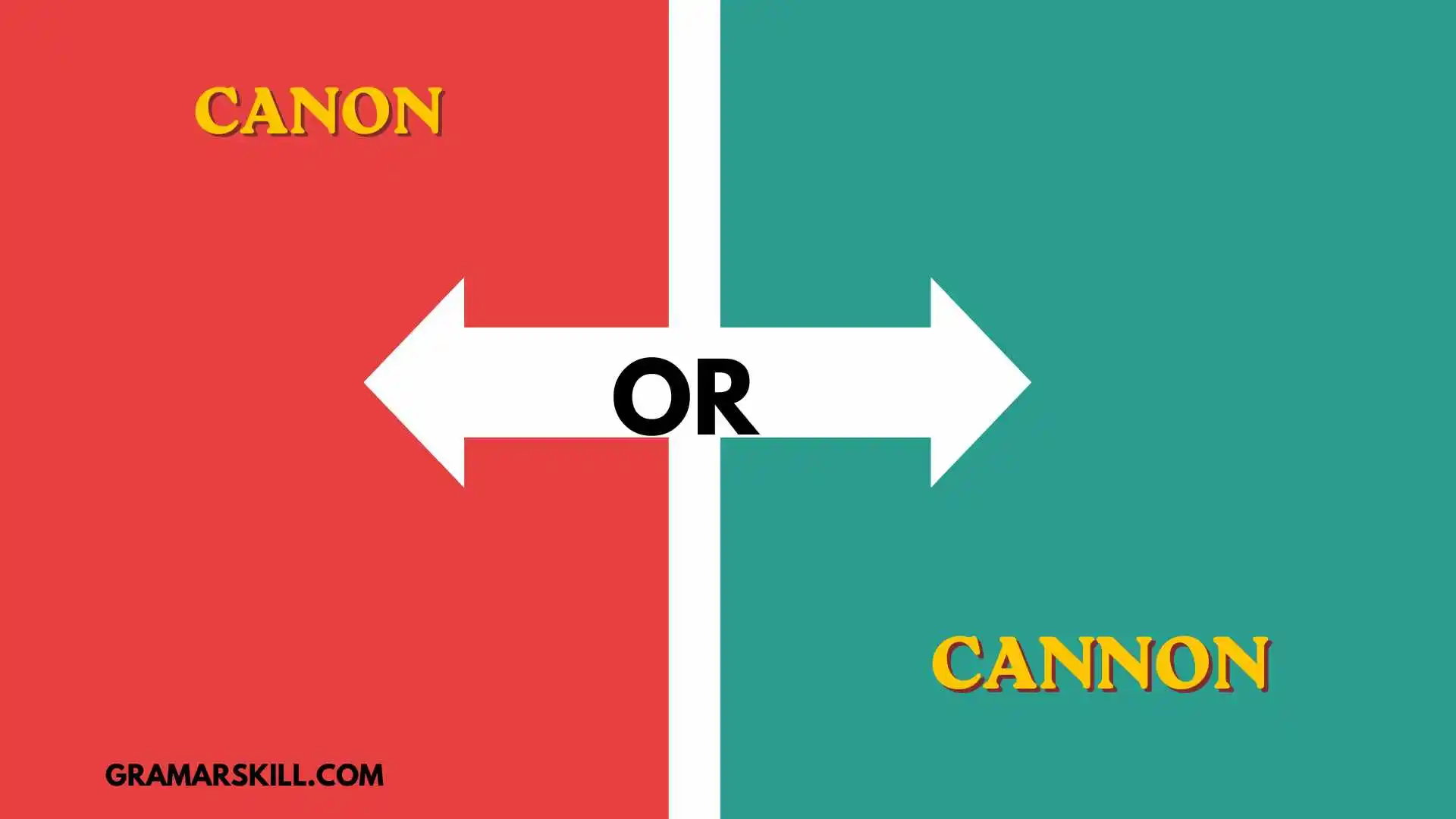
Canon refers to an accepted set of works, principles, or rules, often used in literature, religion, or entertainment. For example, “Harry Potter is part of the series’ official canon.”
Cannon, on the other hand, is a large, heavy gun or artillery weapon used in military contexts. For example, “The museum displayed a 19th-century cannon.”
In short:
- Canon = official rule, accepted works, principles
- Cannon = artillery gun
Meaning of the Correct Form
Canon
The word canon has several related meanings, mostly linked to rules, standards, or official works.
- In literature and media:
- Canon refers to works that are officially recognized as part of a story or universe.
- Example (US/UK): “The new comic series is part of the Spider-Man canon.”
- In religion:
- Canon can mean a set of sacred books or church rules.
- Example (UK): “The Bible’s canon includes the Old and New Testaments.”
- Example (US): “The canon of Catholic teaching guides moral decisions.”
- In general rules or principles:
- Canon can also refer to accepted principles in art, science, or ethics.
- Example: “Shakespeare’s works are considered part of the English literary canon.”
Spelling Notes:
- In both British English and American English, the spelling is canon.
- Pronunciation: /ˈkæn.ən/
Meaning of the Incorrect Form (if any)
Cannon
Many people mistakenly write cannon when they mean canon, often because they sound the same.
Cannon is an entirely different word with a physical meaning:
- A large gun used in battles or historical warfare.
- Example: “The fortress was defended with a massive cannon.”
Using cannon instead of canon in writing about literature or rules is incorrect. For instance:
- ❌ “This book is part of the official cannon.”
- ✅ “This book is part of the official canon.”
Spelling Notes:
- Both UK and US English spell it as cannon.
- Pronunciation: /ˈkæn.ən/ identical to canon in most accents, which explains the common confusion.
Keyword Comparison / Key Differences

| Feature | Canon | Cannon |
| Meaning | Accepted works, rules, or principles | Large artillery gun |
| Usage | Literature, religion, principles | Military, warfare, historical context |
| Example | “Harry Potter is canon.” | “The pirate fired a cannon.” |
| Spelling (UK/US) | Same in both: canon | Same in both: cannon |
| Common Mistake | Replacing canon with cannon | Rarely misused in literature |
Key Tip:
If you’re talking about books, rules, or official stories, use canon.
If you’re talking about weapons or artillery, use cannon.
Common Mistakes People Make
- Mixing up canon and cannon in writing
- ❌ “The Star Wars cannon includes only the first six films.”
- ✅ “The Star Wars canon includes only the first six films.”
- Using cannon figuratively in literature
- ❌ “This novel is a cannon in modern fiction.”
- ✅ “This novel is canon in modern fiction.”
- Confusing plural forms
- Canon → canons (more than one principle or accepted work)
- Cannon → cannons (more than one artillery gun)
- Example: “The museum displayed three cannons from the 18th century.”
- Pronunciation causing miswriting
- Both words are pronounced the same, leading to typos. Always double-check context.
Correct Usage in Sentences
Canon (UK & US examples)
- “Shakespeare’s plays are part of the English literary canon.”
- “The canon of Catholic law is studied worldwide.”
- “All the films produced after 2010 are not considered canon in the franchise.”
- “Doctor Who has a complex canon that fans often debate.”
Cannon (UK & US examples)
- “The fort was protected by a heavy cannon.”
- “Historical reenactments often feature working cannons.”
- “Pirates fired a cannon from the ship during the battle.”
- “The museum has a 17th-century French cannon on display.”
Tips to Remember the Correct Usage
- Think about meaning:
- If it’s about stories, rules, or books → canon
- If it’s about weapons → cannon
- Mnemonic trick:
- Canon → “A for Authoritative” (rules, official works)
- Cannon → “C for Combat” (artillery, guns)
- Plural check:
- Multiple rules → canons
- Multiple guns → cannons
- Context clue method:
- Words like story, book, series, principle → canon
- Words like battle, gun, fort, artillery → cannon
FAQs (Frequently Asked Questions)
1. Is “canon” only used in literature?
No, canon also applies to religion and general rules. For example, church laws are part of the canon.
2. Can I use “cannon” figuratively?
Not really. Cannon is strictly a weapon. Use canon when referring to rules, works, or principles.
3. Are there UK vs US differences in these words?
No significant differences. Both UK and US English use the same spelling and meaning.
4. How do I remember which is correct?
Use the mnemonic: Canon = Authoritative rules; Cannon = Combat weapon.
5. Can “canon” refer to TV series or movies?
Yes, it refers to official stories or events in a series’ universe. Non-official stories are called “non-canon.”
6. What is the plural of canon and cannon?
- Canon → canons
- Cannon → cannons
7. Why do people confuse them?
Both are pronounced the same (/ˈkæn.ən/), so people often write the wrong one based on sound alone.
Conclusion
The difference between canon and cannon may seem small, but using the right word is crucial for clarity and professionalism. Canon refers to accepted rules, works, or principles, while cannon refers to a large artillery gun. Remembering the context and using simple mnemonics can help prevent mistakes.
By applying these tips and examples, both UK and US readers can confidently use canon and cannon correctly in writing and speech. Next time you’re discussing literature, religion, or historical battles, make sure your word choice reflects your intended meaning.
Call to Action:
Keep this guide handy, and next time you’re writing about official stories or artillery, check which one you need. Practice using both in sentences, and soon you’ll never confuse canon or cannon again!

I’m Henry Collins, a passionate grammar enthusiast who loves making English simple and clear for everyone. I enjoy breaking down tricky grammar rules into easy, everyday language. Through my writing, I aim to help learners build confidence and write with accuracy. My goal is to turn confusion into clarity one word at a time.