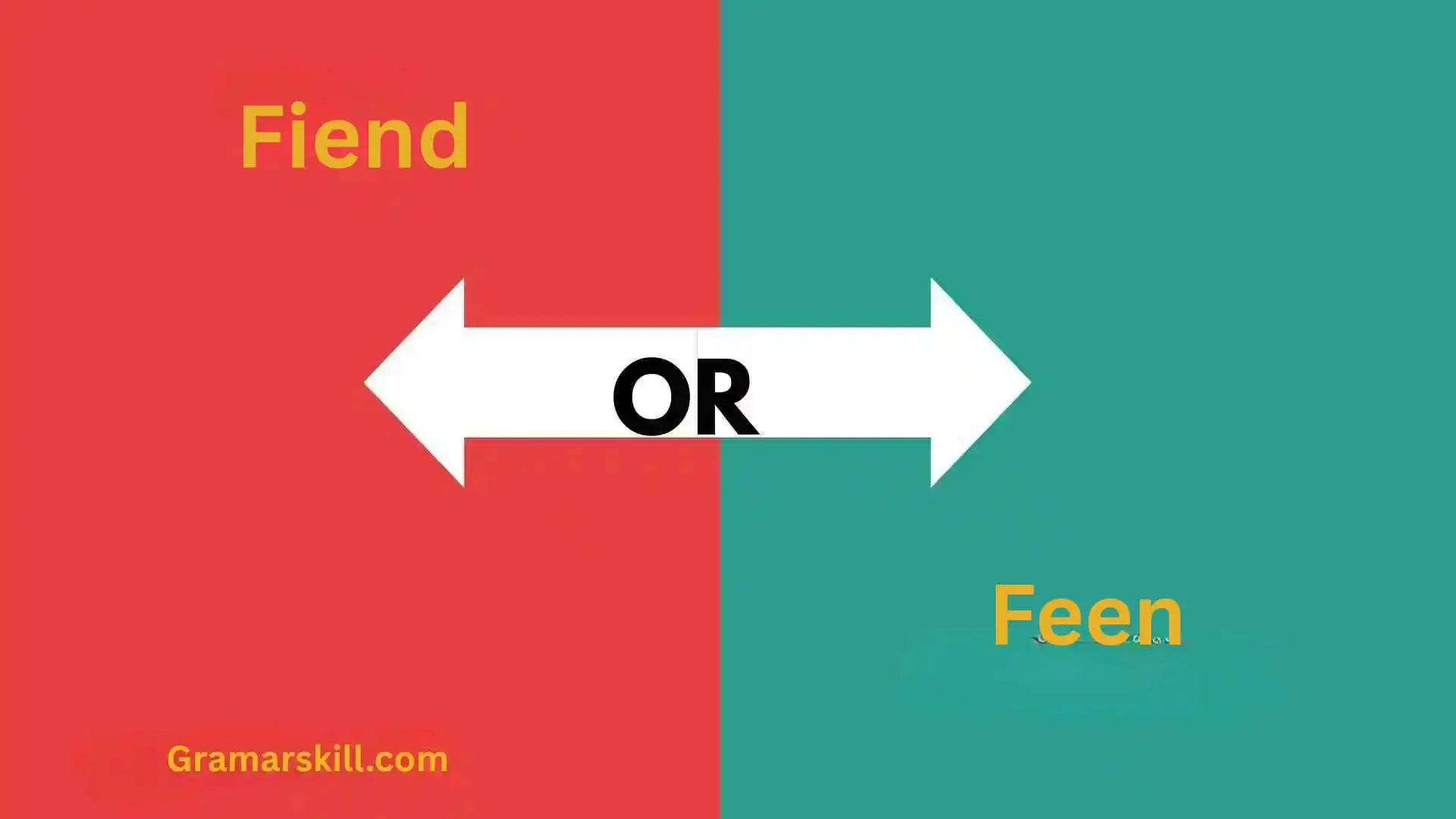
Have you ever wondered whether the word you’re using is “fiend” or “feen”? You’re not alone. Many English speakers, learners, and writers get confused between these two spellings. While they might sound similar when spoken, their meanings and correctness differ significantly. Misusing them can lead to misunderstandings in both casual conversations and formal writing.
Understanding this distinction is particularly important for people using British English and American English, as spelling preferences and idiomatic expressions can differ slightly. For instance, British writers often pay more attention to etymology and correct spelling in formal writing, while American English speakers might encounter informal variations more frequently in digital content.
In addition, knowing the correct form is crucial for students, writers, and content creators. Using the wrong form can make you appear less credible or confuse your audience. Therefore, this guide will clarify everything about “fiend or feen”, provide examples, and show you how to use the word correctly in both UK and US contexts.
Quick Answer
The correct form is “fiend”. The term “feen” is a common misspelling or phonetic variation that you may see online or in informal writing, but it is not correct in standard English.
Fiend refers to someone with an extreme obsession, a wicked person, or a person addicted to something (like a coffee fiend or a video game fiend). On the other hand, feen has no recognized meaning in English dictionaries and should always be avoided in professional writing.
Meaning of the Correct Form
Fiend – Definition and Usage
The word fiend has several related meanings in English. Its use can be slightly different in British and American English, though the general concept remains the same:
- An evil or wicked person
- Example (UK): The villain in the novel was a true fiend, causing chaos wherever he went.
- Example (US): The serial killer was described as a fiend by the media.
- A person who is extremely enthusiastic or addicted to something
- Example (UK): She’s a chocolate fiend and can’t resist any dessert.
- Example (US): He’s a video game fiend, playing for hours every day.
- Historical / literary use – a demon or devil
- Example (UK & US): In old folklore, fiends were thought to haunt the night and terrify villagers.
UK vs US Usage Notes:
- In British English, “fiend” is often used in literature and formal writing, especially when describing someone evil or morally corrupt.
- In American English, it is more common to use “fiend” in casual speech to describe someone obsessed with something, like a caffeine fiend or gym fiend.
Meaning of the Incorrect Form
Feen – What It Isn’t
The spelling “feen” is not recognized as a standard English word. It is usually a phonetic spelling of how some people pronounce “fiend” in casual conversation or social media posts.
- Incorrect Example: He’s a real feen for coffee.
- Corrected Version: He’s a real fiend for coffee.
People sometimes confuse it with words like “fien” (which is obsolete or dialectal) or try to mimic slang variations in music or social media. However, in formal writing, professional content, and educational materials, “fiend” is always the correct choice.
Keyword Comparison / Key Differences
| Feature | Fiend (Correct) | Feen (Incorrect) |
| Definition | A wicked person, demon, or someone addicted to something | No meaning in standard English |
| UK English | Commonly used in literature and formal contexts | Rare, considered a misspelling |
| US English | Common in casual speech, especially for addictions or obsessions | Incorrect; might appear online informally |
| Pronunciation | /fiːnd/ | Same as fiend, but spelling is wrong |
| Usage Tip | Always use “fiend” in writing and speaking | Avoid in professional and educational contexts |
Key Insight: While “feen” may appear online in informal contexts, it should never replace “fiend” in standard English, whether you are writing for a UK or US audience.
Common Mistakes People Make
Many mistakes happen because of phonetic spelling and mishearing the word. Here are the most frequent errors:
- Using “feen” instead of “fiend” online
- Example: I’m a feen for chocolate. → Incorrect
- Corrected: I’m a fiend for chocolate.
- Confusing “fiend” with “friend”
- Example: He’s my fiend from school. → Incorrect
- Corrected: He’s my friend from school.
- Assuming “fiend” only means “evil person”
- Some people forget it can also mean someone with an addiction or obsession.
- Example: She’s a fiend for books. → Correct
- Spelling differences ignored in international contexts
- British students writing “feen” in exams may lose marks.
Pro Tip: Always double-check spelling and context. If you’re referring to obsession or addiction, or a villainous person, “fiend” is correct.
Correct Usage in Sentences
Here are multiple examples for both UK and US audiences. These will help you see how “fiend” works in different contexts.
Describing an Evil Person
- UK: The corrupt landlord was a fiend in the eyes of the tenants.
- US: The con artist was a real fiend, tricking innocent people for years.
Describing an Addiction or Obsession
- UK: He’s a fitness fiend, training every morning without fail.
- US: She’s a caffeine fiend, needing at least four cups a day.
Literary / Historical Context
- UK: Legends spoke of fiends haunting the ancient castles at night.
- US: The novel depicted fiends lurking in the shadows of the haunted mansion.
Casual / Everyday Context
- UK: I admit, I’m a pizza fiend can’t resist a slice after work.
- US: My brother is a video game fiend, playing for hours each weekend.
Key Takeaway
Whether you’re in London or New York, “fiend” is the word to use. Avoid “feen” entirely.
Tips to Remember the Correct Usage
Here are some practical ways to remember “fiend” and avoid mistakes:
- Mnemonic Tip:
- “Fiend has i for ‘intense’ obsession or evil.”
- Think: i = intensity = fiend
- Associate with Addiction or Obsession:
- Chocolate fiend, caffeine fiend, video game fiend
- Literary Tip:
- When writing about evil or villains, “fiend” fits perfectly.
- Example: He was a fiend of a mastermind.
- Avoid Phonetic Misspellings:
- Remember, feen is always incorrect.
- If unsure, check a dictionary like Cambridge or Merriam-Webster.
- UK vs US Reminder:
- In formal writing (essays, publications), stick to fiend.
- In casual US speech, people might mispronounce, but spell it correctly in writing.
FAQs About Fiend or Feen
1. Is “feen” ever correct?
No. “Feen” is always a misspelling of “fiend” and should be avoided in formal writing.
2. What does “fiend” mean in US English?
It can mean an evil person or someone obsessed/addicted to something, like a video game fiend.
3. What does “fiend” mean in UK English?
Similar to US usage, but often used in literature or formal contexts to describe villains or demons.
4. Can “fiend” refer to a friend?
No. “Fiend” is not the same as “friend.” Saying “he’s my fiend” is incorrect unless jokingly referring to someone’s obsession or evilness.
5. How do I remember the spelling?
Remember “fiend” contains “i,” which stands for intense obsession or evil. Avoid writing “feen.”
6. Are there idioms with “fiend”?
Yes, e.g., coffee fiend, chess fiend, a fiend for speed.
7. Can I use “fiend” in casual texting?
Yes, but ensure spelling is correct. Avoid “feen” even in informal contexts.
Conclusion
In summary, the correct spelling is “fiend”, while “feen” is a common mistake or phonetic misrepresentation. Understanding the word’s meaning whether describing evil, obsession, or addiction can help you write confidently in both UK and US English.
Remember these key points:
- Fiend = correct spelling
- Feen = incorrect / avoid it
- Fiend can mean evil person, demon, or obsessive person
- Check context: literary vs casual, UK vs US usage
- Use mnemonics and examples to remember
READ MORE ARTICLES..
Freshman or Freshmen: Which One Is Correct in English? 2026
Pyjamas or Pajamas: Meaning, Rules, and Examples 2026
Or vs Nor: Grammar Rules You Must Know 2026
Infact or In Fact: Grammar Tips, Examples, and Usage Guide 2026

I’m Henry Collins, a passionate grammar enthusiast who loves making English simple and clear for everyone. I enjoy breaking down tricky grammar rules into easy, everyday language. Through my writing, I aim to help learners build confidence and write with accuracy. My goal is to turn confusion into clarity one word at a time.