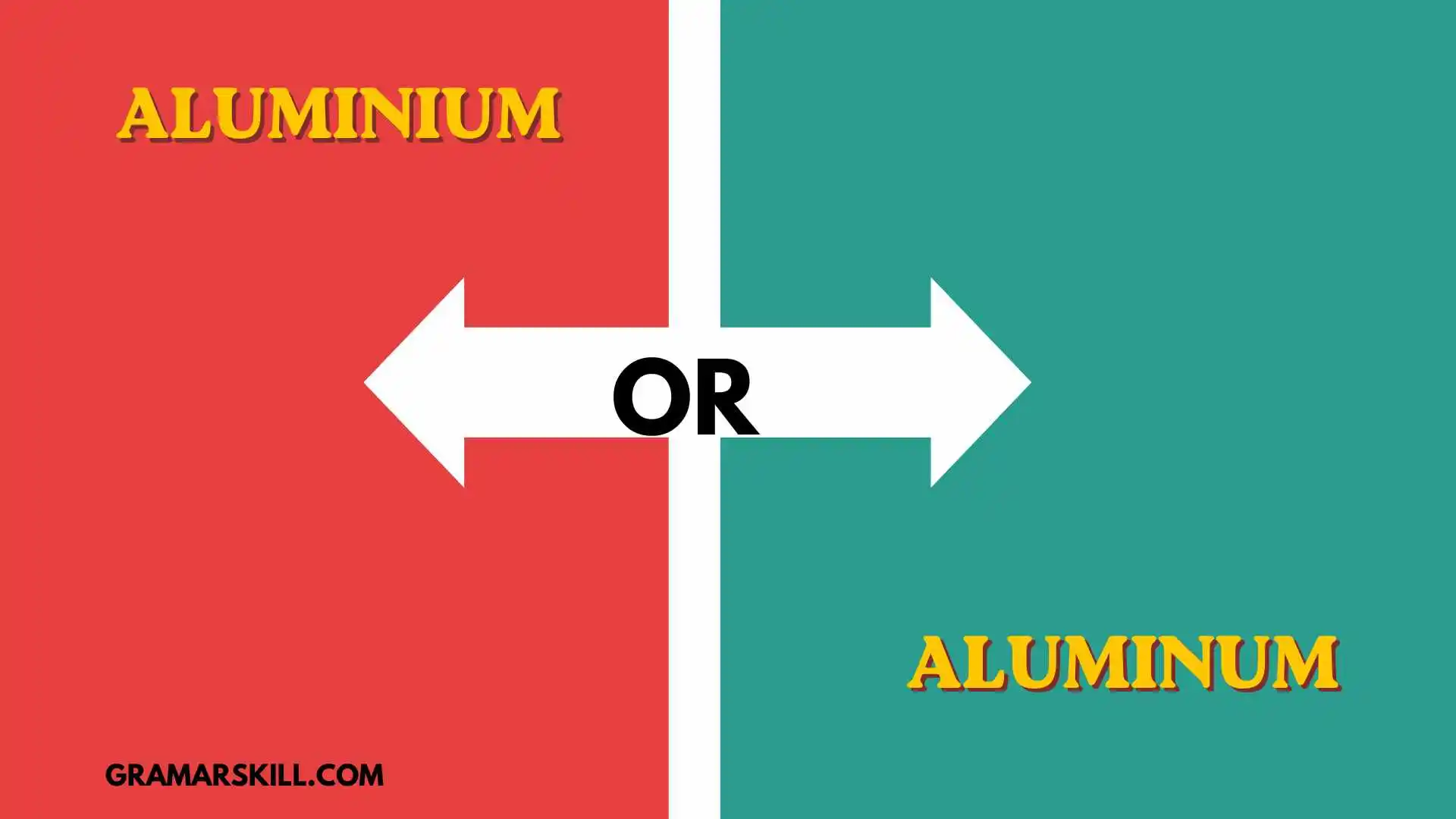
Have you ever wondered whether it’s correct to write aluminium or aluminum? This is a common question for writers, students, and professionals alike. The confusion stems from differences between British and American English spelling. In the UK, you will see aluminium on product labels, scientific papers, and in newspapers. Meanwhile, in the US, aluminum dominates everyday usage.
Understanding the difference is important, especially for international communication. Using the wrong form may make your writing appear unprofessional, or even confuse your audience. Whether you are writing a report, crafting an article, or labeling products, clarity matters.
Additionally, the spelling difference does not change the chemical properties or meaning of the word. Both refer to the same lightweight, silver-colored metal widely used in construction, packaging, and transportation.
Quick Answer
The short answer is:
- Aluminium is the standard spelling in British English.
- Aluminum is the standard spelling in American English.
Both refer to the same metal, so your choice depends on your audience. Use aluminium for UK readers and aluminum for US readers.
Meaning of the Correct Form
Aluminium (UK English):
- Spelled with “-ium” at the end.
- Pronounced: /ˌæl.jʊˈmɪn.i.əm/
- Common in British publications, scientific texts, and international standards outside the US.
Example Sentences (UK):
- “The car body is made of aluminium to reduce weight.”
- “Aluminium cans are widely recycled in the UK.”
- “The spacecraft’s hull contains strong aluminium alloys.”
Aluminum (US English):
- Spelled with “-um” at the end.
- Pronounced: /əˈluː.mə.nəm/
- Standard in American dictionaries, newspapers, and everyday writing.
Example Sentences (US):
- “The aircraft is built using lightweight aluminum.”
- “Recycling aluminum cans helps the environment.”
- “This aluminum foil is perfect for baking.”
Meaning of the Incorrect Form
Sometimes, people mistakenly use the wrong form depending on their location. For instance:
- Writing aluminum in a British article may appear as a typo.
- Writing aluminium in an American report might confuse readers.
Why the confusion exists:
The term originates from the Latin word alumen, meaning “bitter salt.” When Sir Humphry Davy first isolated the metal in the early 19th century, he named it alumium, later changed to aluminum in the US. The British eventually adopted aluminium to align with other metallic elements ending in “-ium,” such as sodium and magnesium.
Keyword Comparison / Key Differences
| Feature | Aluminium (UK) | Aluminum (US) |
| Spelling | Aluminium | Aluminum |
| Pronunciation | /ˌæl.jʊˈmɪn.i.əm/ | /əˈluː.mə.nəm/ |
| Usage | UK, Commonwealth countries | US, Canada (some areas) |
| Dictionaries | Oxford, Cambridge | Merriam-Webster |
| Historical Note | Adopted to match “-ium” metals | Original Davy spelling |
Key Difference: The metal is the same, only the spelling and pronunciation differ.
Common Mistakes People Make
- Mixing forms in one text
- Incorrect: “The aluminium foil is made of aluminum.”
- Correct (UK): “The aluminium foil is recyclable.”
- Correct (US): “The aluminum foil is recyclable.”
- Assuming one form is scientifically “wrong”
- Both spellings are valid; context matters.
- Pronunciation errors
- UK readers may find “aluminum” pronunciation unusual.
- US readers may find “aluminium” long and clunky.
- Product labeling errors
- US-made items labeled “aluminium” may confuse buyers.
- Search engine optimization (SEO) issues
- Use the correct regional spelling to target your audience.
Correct Usage in Sentences
UK English Examples:
- “The bicycle frame is constructed from aluminium alloy for durability.”
- “Aluminium is used in aircraft manufacturing due to its light weight.”
- “Many UK households recycle aluminium cans weekly.”
US English Examples:
- “The kitchen is stocked with aluminum cookware.”
- “Modern airplanes rely on aluminum alloys for strength.”
- “Recycling aluminum saves energy and reduces waste.”
Additional Tips:
- For academic writing, follow your style guide.
- For global audiences, mention both: “aluminium (aluminum in the US).”
Tips to Remember the Correct Usage
- Think of the audience first – Use aluminium for UK, aluminum for US.
- Mnemonic trick:
- “UK ends with -ium, like other metals (magnesium, sodium).”
- “US shortens to -um, easier to spell and pronounce.”
- Check your dictionary – Oxford for UK, Merriam-Webster for US.
- Stay consistent – Avoid mixing spellings in one document.
- When in doubt – Mention both forms: “aluminium (US: aluminum).”
FAQs
1. Are aluminium and aluminum the same metal?
Yes, both words refer to the same lightweight, silver-colored metal used in packaging, construction, and transportation.
2. Why is the spelling different in the UK and US?
The difference stems from historical naming conventions. The UK adopted “aluminium” to match other metals ending with “-ium,” while the US kept Davy’s original “aluminum.”
3. Which spelling should I use in scientific writing?
Follow your style guide: UK journals prefer aluminium, US journals prefer aluminum. Consistency is key.
4. Can I use aluminum in UK English writing?
It’s understandable but may appear non-standard. Use aluminium to sound correct in UK contexts.
5. Is pronunciation different?
Yes. UK: /ˌæl.jʊˈmɪn.i.əm/ | US: /əˈluː.mə.nəm/.
6. How do I avoid mistakes in SEO or product labeling?
Use the regional spelling your audience expects and consider adding both forms in text to improve search visibility.
7. Are there other metals with similar spelling issues?
No major metals have this US/UK difference, but many chemical terms have regional variations (e.g., sulphur vs sulfur).
Conclusion
In summary, the confusion between aluminium and aluminum is entirely a matter of regional spelling. The metal is the same, but your choice depends on your audience. UK readers expect aluminium, while US readers are used to aluminum.
By remembering simple tips audience focus, mnemonic tricks, and consistent spelling you can write clearly and professionally. When in doubt, clarify both forms to avoid confusion: “aluminium (aluminum in the US).”
Using the correct form enhances credibility, improves readability, and ensures your writing resonates globally. Start practicing these tips today, and you’ll never get mixed up again!

I’m Daniel Brooks, a passionate grammar enthusiast dedicated to making English simple and clear for everyone. I love breaking down confusing rules into easy, practical explanations you can actually use. Through my content, I aim to help learners write with confidence and accuracy. I believe good grammar isn’t about perfection it’s about clear communication.