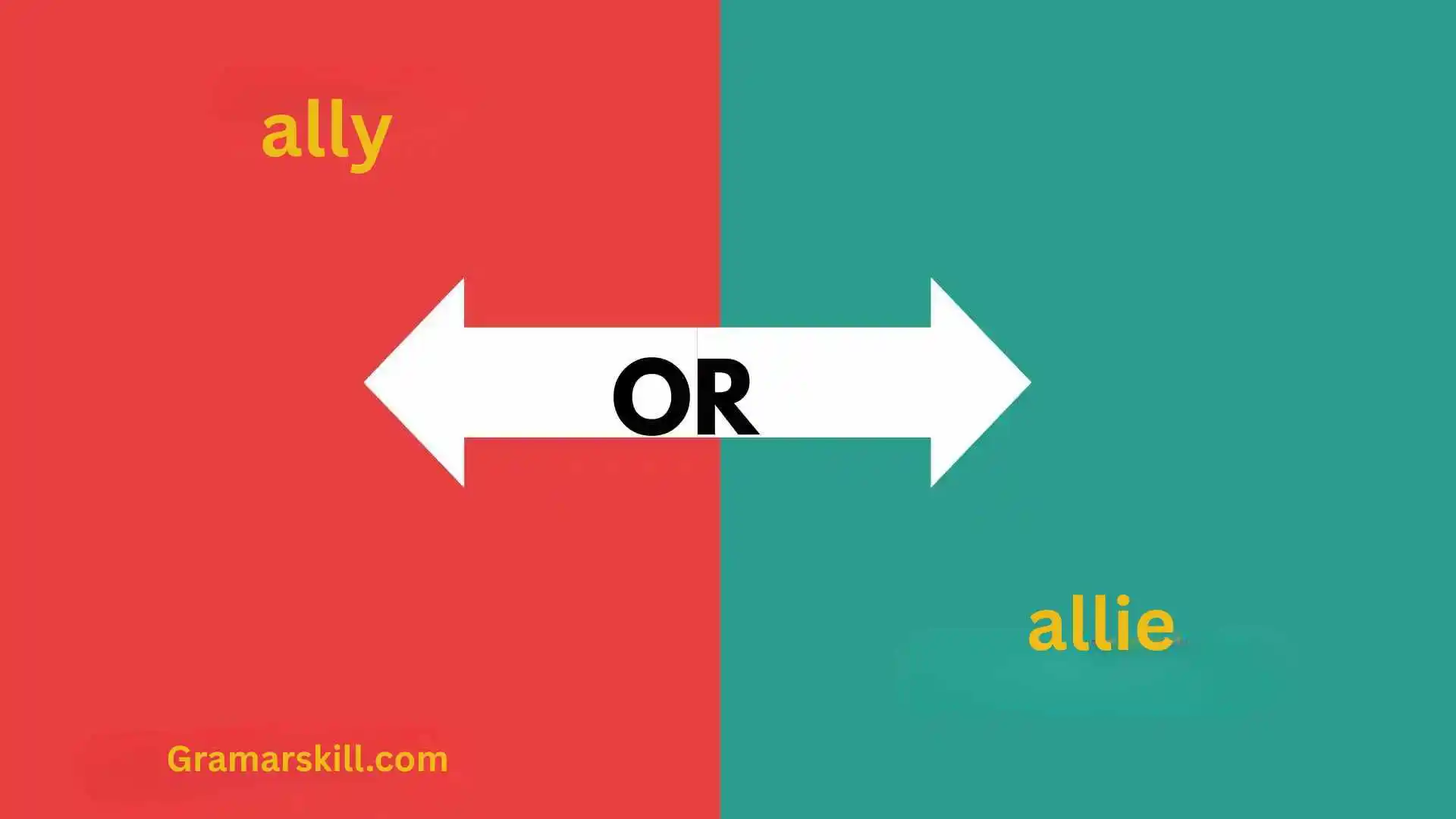
English learners and even native speakers often get confused between “ally” and “allie.” While they may sound similar, their meanings and usage are very different. Choosing the wrong spelling can change the meaning of a sentence and lead to misunderstandings.
This confusion is common in both UK and US English, but understanding the distinction is essential. Whether you’re writing an academic essay, a professional email, or just chatting online, using the correct term ensures clarity.
Furthermore, this topic is particularly interesting because the differences highlight how language evolves in spelling and usage across regions. British English tends to be more traditional in spelling, while American English often adapts simpler forms, yet in this case, the distinction is universal.
Quick Answer
“Ally” is the correct word to describe a supportive partner, friend, or country.
“Allie” is typically a personal name and not an alternative spelling for “ally.” Therefore, unless you are referring to someone named Allie, you should always use ally.
In short:
- ✅ Correct: She is a strong ally in the fight for equality.
- ❌ Incorrect: She is a strong allie in the fight for equality.
Meaning of the Correct Form: “Ally”
The word ally is a noun or verb depending on context:
As a noun:
- Refers to a supportive friend or partner.
- Can also describe a country or organization that cooperates with another for a common purpose.
Examples:
- UK English: France was an ally of Britain during the war.
- US English: He became an ally to the LGBTQ+ community in his city.
As a verb:
- Means to join forces with someone.
- Expresses collaboration or support.
Examples:
- UK English: The two companies allied to reduce pollution.
- US English: She allied with local charities to help the unhoused people.
Key point: “Ally” is always about support, partnership, or collaboration.
Meaning of the Incorrect Form: “Allie”
The term allie is not an accepted alternative spelling of “ally.” It is commonly used as:
- A personal name, often short for Allison, Alexandra, or Alina.
Examples:
- UK/US English: Allie went to the park with her friends.
- UK/US English: I met Allie at the coffee shop yesterday.
Using “allie” in place of “ally” is considered a spelling error and can confuse readers.
Keyword Comparison / Key Differences
| Feature | Ally | Allie |
| Part of speech | Noun/Verb | Noun (proper name) |
| Meaning | Supportive friend/partner | Personal name |
| Correct in sentences? | ✅ Yes | ❌ No (unless referring to a person) |
| UK English usage | Same as US | Same as US |
| Example | She is my ally in this cause. | Allie is my friend. |
Transition note: While the pronunciation is similar, context is the key. If you mean support or partnership, always choose “ally.”
Common Mistakes People Make
Many errors occur because of phonetic similarity. Here are typical mistakes:
- Using “allie” instead of “ally” in professional writing.
- ❌ The government formed several allie nations.
- ✅ The government formed several ally nations.
- Assuming “allie” is British spelling
- Some learners think “allie” is the UK variant. This is false. Both UK & US English use “ally.”
- Confusing the noun and verb forms
- ❌ She allied allie during the campaign.
- ✅ She allied with an ally during the campaign.
- Mixing it with similar-sounding words
- Words like alley (a narrow street) or Allyson can cause confusion. Always check context.
- Misuse in digital communication
- Social media posts often write allie instead of ally, which is informal but incorrect in formal writing.
Correct Usage in Sentences
Here’s how to use ally correctly in real-life contexts:
UK English Examples:
- The UK was a key ally in World War II.
- Teachers should be allies to students struggling with learning difficulties.
- We must ally with local councils to improve public transport.
US English Examples:
- She is a trusted ally in our environmental campaign.
- The US allied with its partners to address climate change.
- He allied with other activists to promote equality.
Note: In both UK and US English, “ally” is always correct, whether as a noun or verb.
Tips to Remember the Correct Usage
- Think meaning first: If it’s about support or partnership → ally.
- Allie = name: If referring to a person → Allie.
- Mnemonic trick: “A-L-L-Y helps you stand by someone; an ‘i’ in Allie stands for identity (name).”
- Check context: If it fits in a sentence about friendship, teamwork, or international relations, it’s ally.
- Avoid phonetic guessing: Writing based on sound alone leads to errors.
FAQs
Q1: Can I use “allie” instead of “ally”?
- No, unless you are referring to someone named Allie. For support or partnership, always use “ally.”
Q2: Is “ally” used in both British and American English?
- Yes, it is universally used in both UK and US English with the same meaning and spelling.
Q3: What’s the difference between “ally” and “alley”?
- Ally = a supportive partner; alley = a narrow street. Example: She walked down the alley to meet her ally.
Q4: Can “ally” be used as a verb?
- Yes, it means to join forces or collaborate. Example: We allied with local charities.
Q5: Is “Allie” a common name?
- Yes, especially in the US, short for Allison, Alexandra, or Alina.
Q6: Are there UK-specific examples of “ally”?
- Yes, in history and politics: Britain’s allies in the European Union.
Q7: How can I remember the spelling?
- Focus on the role: Ally helps you; Allie is a name.
Conclusion
Understanding the difference between ally and allie is simple once you remember:
- Ally = support, partnership, collaboration.
- Allie = a personal name, never a substitute for ally.
Whether you are writing in British English or American English, the correct choice for supportive relationships, countries, or organisations is always ally.
READ MORE ARTICLES..
Semicolon or Colon: What is the difference and usage. 2026
trys or tries: What is the difference & how to use them.2026
Amid or Amidst: Correct Usage, Definitions, and Examples 2026
Fulfilment or Fulfillment: what is the difference & usage? 2026

I am Julian Parker, a passionate grammar enthusiast and content writer dedicated to making English rules simple and easy to understand. I specialize in breaking down complex grammar topics into clear, practical explanations. I enjoy helping readers improve their writing skills with confidence. My goal is to make learning grammar engaging, simple, and accessible for everyone.