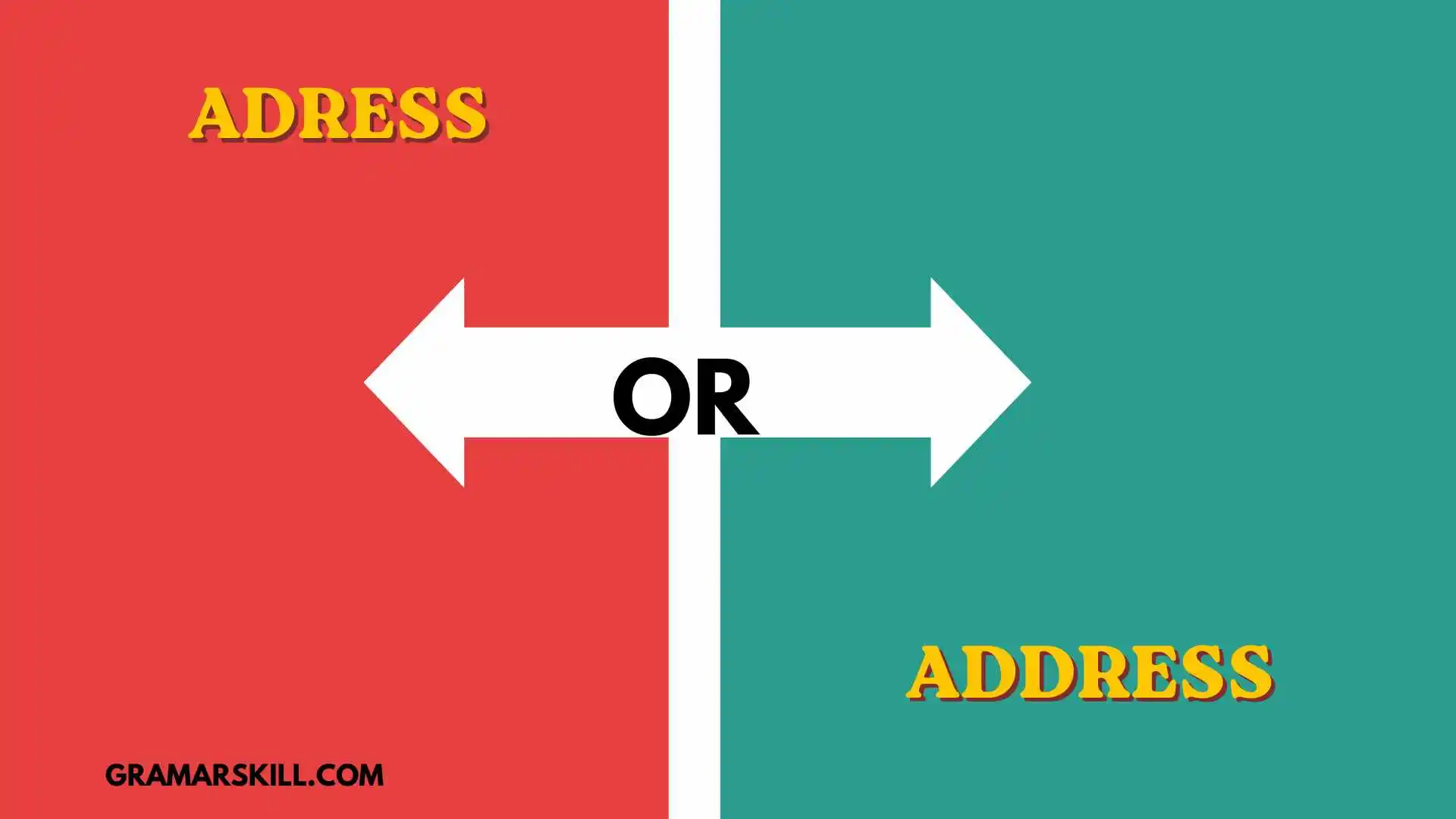
Many English learners and even native speakers often get confused between “adress” and “address.” This confusion is understandable because the two words look almost identical. However, only one of them is correct in standard English. Using the wrong form can make your writing appear careless or unprofessional, whether in emails, letters, or online communication.
Understanding the difference is particularly important for both UK and US English readers. While spelling and grammar rules are mostly consistent for this word, knowing the correct usage ensures you avoid mistakes in formal and informal contexts. From filling out forms online to sending packages, a small spelling error can sometimes cause unnecessary confusion.
In this guide, we will clarify the proper usage, highlight common mistakes, provide examples in both British and American English, and give tips to remember the correct spelling. By the end, you will confidently know when and how to use this word correctly.
Quick Answer
The correct spelling is “address”.
“Adress” is an incorrect form and should be avoided. In both UK and US English, “address” is used for locations, websites, email contacts, or formal speech when directing words to someone. Always double-check your writing, especially in professional or official contexts, to prevent mistakes.
Meaning of the Correct Form
The word “address” has multiple meanings depending on the context. Below is a clear breakdown:
1. Location or Place
Address is commonly used to indicate a location.
- UK Example: “Please write your full address on the form, including postcode.”
- US Example: “Enter your home address to receive the delivery.”
2. Email or Website
In digital contexts, address refers to an email or internet location.
- UK Example: “Send your CV to my email address: example@domain.co.uk.”
- US Example: “Visit the website at the following address: www.example.com.”
3. Speaking or Directing Words
Address can also mean to speak to someone formally or to handle a situation.
- UK Example: “The Prime Minister will address the nation tonight.”
- US Example: “The CEO will address the employees during the meeting.”
Key point: In all contexts, “address” is spelled with two D’s and one S.
Meaning of the Incorrect Form
The spelling “adress” is incorrect in standard English.
Common misconceptions include:
- Thinking it is a shortened version of address.
- Confusing it with a foreign spelling (some languages omit one D).
- Typing errors due to fast typing or autocorrect mistakes.
Example of wrong usage:
- ❌ “Please write your full adress on the form.”
- ❌ “Send your email to my adress.”
Even though it looks plausible, “adress” is never correct in UK or US English.
Keyword Comparison / Key Differences
| Aspect | Correct Form: address | Incorrect Form: adress |
| Spelling | Two D’s, one S | One D, one S |
| Meaning | Location, email, speech | None; considered a typo |
| Usage | Standard in UK & US | Wrong in all English contexts |
| Examples | “Enter your address” | “Enter your adress” ❌ |
| Professional Writing | Acceptable | Unprofessional |
| Digital Context | Email or website | Wrong |
UK vs US Note: Both countries use address consistently. There are no spelling differences here, unlike words such as “colour” (UK) vs “color” (US).
* Adress or Address Meaning
| Topic | Information |
|---|---|
| Meaning | Address is the correct spelling in English. It can mean the location of a person, home, business, or website. It can also refer to speaking to someone or dealing with a particular issue. Adress is a misspelling and should be avoided in formal and informal writing. |
* Adress or Address Example
| Topic | Information |
|---|---|
| Examples | Correct: “Please send the package to my address.” Correct: “The manager addressed the concerns during the meeting.” Incorrect: “Please send the package to my adress.” |
* Adress or Address Verb
| Topic | Information |
|---|---|
| Verb Usage | As a verb, address means to speak to someone, deal with a problem, or direct remarks toward a person or group. For example, “The teacher addressed the students before the exam” and “The company addressed customer complaints quickly.” |
Adress or Address Pronunciation
| Topic | Information |
|---|---|
| Pronunciation | Address is commonly pronounced as uh-DRESS (/əˈdrɛs/) in both British and American English. Some speakers may also use AD-dress in certain contexts, especially when referring to a location. The spelling adress has no standard pronunciation because it is incorrect. |
Adress or Address Someone
| Topic | Information |
|---|---|
| Meaning | To address someone means to speak directly to that person, greet them formally, or refer to them in a particular way. For example, “She addressed the audience with confidence” or “Please address the judge as ‘Your Honor.'” |
Common Mistakes People Make
Even experienced writers sometimes make these mistakes. Here are a few practical examples:
- Omitting a D
- ❌ “What’s your adress?”
- ✅ “What’s your address?”
- Using it for all communications without context
- ❌ “I need your adress for the meeting” (okay for location, but not email context if unspecified)
- ✅ “I need your email address for the meeting.”
- Confusing with “addressee”
- ❌ “The adress is incorrect.”
- ✅ “The addressee is incorrect.”
- Ignoring punctuation and capitalization in formal writing
- ❌ “please send me your Address”
- ✅ “Please send me your address.”
Tip: Always double-check if you are filling official forms or writing emails—autocorrect can sometimes change “address” to “adress” accidentally.
Correct Usage in Sentences
Here are multiple examples for both UK and US readers:
Location / Place
- UK: “Her home address is 45 Oxford Street, London.”
- US: “His business address is 123 Main Street, New York.”
Email Address
- UK: “Please provide your email address for the newsletter.”
- US: “Make sure your email address is valid before signing up.”
Speaking / Formal Address
- UK: “The principal will address the parents at 6 PM.”
- US: “The president will address the staff tomorrow.”
Postal / Online Forms
- UK: “Fill in your postal address carefully.”
- US: “Enter your shipping address for fast delivery.”
Tips for Everyday Use
- Always use two D’s: address.
- Use address for digital and physical locations.
- Use address when referring to speaking or handling situations.
Tips to Remember the Correct Usage
- Double D Rule: Think “D” for destination, and you need two D’s in address.
- Check context: If it’s location, email, or formal speech, it’s almost always address.
- Mnemonic: “A letter needs a double D to reach the address.”
- Digital Tip: Email addresses always have address, never adress.
- UK & US Friendly: The spelling doesn’t change, so you don’t need separate versions.
FAQs
1. Is “adress” ever correct?
No, “adress” is always considered a typo or incorrect spelling in both UK and US English.
2. What is the difference between “address” in British and American English?
There is no difference in spelling. Both use address for locations, emails, or formal speech. Only pronunciation might slightly vary.
3. Can “address” be a verb?
Yes! “Address” can mean to speak to someone or deal with a situation.
- Example: “The manager will address the complaints immediately.”
4. How do I remember the correct spelling?
Remember the double D. Think of “Destination Details” to help memorize it.
5. What about “addressee”?
“Addressee” refers to the person receiving a letter, email, or message. Don’t confuse it with “adress.”
6. Is there a pronunciation difference between UK and US English?
Slightly. In UK English, the stress is often on the first syllable: AD-dress. In US English, it can be the same but more fluid depending on regional accents.
7. Does autocorrect help?
Yes, most modern devices correct “adress” to “address,” but you should still proofread official documents.
Conclusion
Understanding the difference between “adress or address” is simple but crucial. Always remember that the correct form is “address”, whether you are writing in UK or US English. It applies to locations, emails, websites, and formal speech. Avoid “adress” at all costs—it’s considered a spelling mistake in any context.
By following the tips, using examples, and practicing regularly, you can confidently write address correctly every time. Always double-check forms, emails, and official documents. Now that you know the difference, your writing will appear professional, accurate, and polished.
Call to Action: Start practicing today! Write down your address in emails, forms, or letters correctly and share this guide with others who might still be confused about “adress or address.”
READ MORE ARTICLES..
Scarry or Scary: what’s the difference & usage? 2026
Dwarfs or Dwarves: Differences, Definitions, and Proper Use 2026
let’s or lets: What’s the difference & usage? 2026
Less or Equal to Sign in Math: Definition, Uses, and Tips 2026

I am Julian Parker, a passionate grammar enthusiast and content writer dedicated to making English rules simple and easy to understand. I specialize in breaking down complex grammar topics into clear, practical explanations. I enjoy helping readers improve their writing skills with confidence. My goal is to make learning grammar engaging, simple, and accessible for everyone.