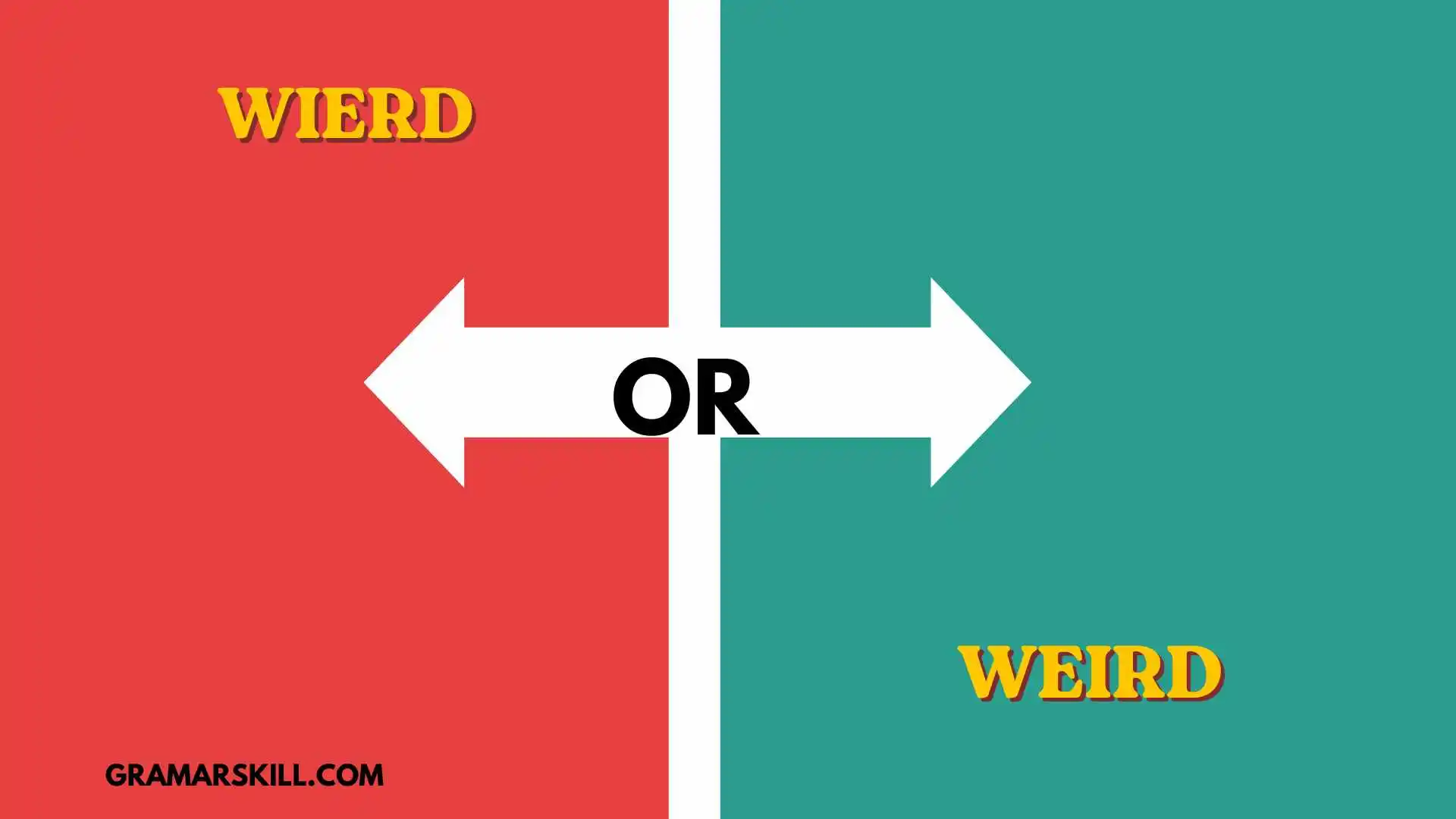
Many English learners and even native speakers often get confused between “wierd” and “weird.” At first glance, both words look similar. However, only one of them is correct. This confusion usually happens because English spelling rules are not always consistent.
In both British English (UK) and American English (US), spelling mistakes like this can affect your writing quality. Whether you are writing emails, essays, blog posts, or social media captions, using the correct spelling builds trust and clarity.
Therefore, understanding the difference between “wierd or weird” is important for anyone who wants to improve their English. In this guide, you will learn the correct spelling, meanings, examples, and simple tips to remember it easily.
Quick Answer
The correct spelling is “weird.”
The word “wierd” is incorrect and is considered a spelling mistake in both UK and US English.
Example:
- ✅ That movie was really weird.
- ❌ That movie was really wierd.
In short, always use “weird” in your writing and avoid “wierd.”
Meaning of the Correct Form (Weird)
The word “weird” is an adjective. It describes something that feels strange, unusual, or different from what you expect.
Simple Definition:
Weird = strange, odd, or unusual
Examples in UK and US English:
There is no difference in meaning or spelling between British and American English. Both use “weird.”
Examples:
- That sound coming from the attic is weird.
- He has a weird sense of humor.
- I had a weird dream last night.
- This food tastes weird, but I like it.
More Contextual Usage:
- Social situations:
It felt weird to talk to a stranger on the train. - Emotions:
I feel weird about this decision. - Experiences:
That was the weirdest day of my life.
Word Forms:
- Weird (adjective)
- Weirdly (adverb)
- Weirdness (noun)
Examples:
- She smiled weirdly at me.
- The weirdness of the story made it interesting.
Meaning of the Incorrect Form (Wierd)
The word “wierd” is simply a misspelling of “weird.”
It has no meaning in standard English and is not accepted in:
- British English
- American English
- Formal or informal writing
Why Do People Write “Wierd”?
Many people mistakenly write “wierd” because they follow the common spelling rule:
“I before E except after C”
However, “weird” is an exception to this rule.
Incorrect Examples:
- ❌ That is a very wierd situation.
- ❌ I had a wierd dream.
These should always be corrected to “weird.”
Keyword Comparison / Key Differences
Let’s clearly compare “wierd” vs “weird.”
| Feature | Weird | Wierd |
| Spelling | ✅ Correct | ❌ Incorrect |
| Meaning | Strange, unusual | No meaning |
| Usage | Used in UK & US English | Not used |
| Grammar | Adjective | Not a valid word |
| Acceptance | Accepted everywhere | Considered an error |
Key Takeaways:
- “Weird” is correct in all cases.
- “Wierd” is always wrong.
- There is no UK vs US difference here.
Wierd or Weird Examples, Meaning, and Usage in English
| Topic | Explanation |
|---|---|
| Wierd or Weird – Which Is Correct? | Weird is the correct spelling in English. Wierd is a common misspelling and should be avoided in formal and informal writing. |
| Wierd or Weird Meaning | The word weird means strange, unusual, unexpected, or difficult to explain. It is used to describe something that seems different from what is normal. |
| Wierd or Weird in English | In English, only weird is recognized as the standard spelling. Dictionaries and grammar guides list weird as the correct form, while wierd is considered an error. |
| Wierd or Weird Examples | Correct: “That was a weird dream.” • “The weather feels weird today.” • “He has a weird sense of humor.” Incorrect: “That was a wierd dream.” • “The weather feels wierd today.” |
| Easy Trick to Remember | Remember the phrase “We are weird.” The word starts with “we”, which can help you remember that weird is spelled W-E-I-R-D, not W-I-E-R-D. |
Common Mistakes People Make
Even advanced learners sometimes make mistakes with “weird.” Let’s look at common errors and how to avoid them.
1. Mixing the Letter Order
❌ Wierd
✅ Weird
This is the most common mistake.
2. Trusting the “I Before E” Rule Too Much
Many people think:
I comes before E
However, English has many exceptions, and “weird” is one of them.
3. Typing Errors
Sometimes, people know the correct spelling but type quickly and write “wierd” by mistake.
Tip: Always proofread your writing.
4. Auto-Correct Confusion
Some devices may not immediately correct “wierd,” especially if settings are off.
5. Pronunciation Confusion
Both “wierd” and “weird” sound the same when spoken, so learners may not notice the spelling difference.
Correct Usage in Sentences
Here are multiple real-life examples using “weird” correctly in both UK and US contexts.
Everyday Conversations:
- That’s a weird way to solve the problem.
- Why are you acting so weird today?
- This place feels weird at night.
UK English Examples:
- The weather in London has been weird lately.
- He wore a weird outfit to the party.
- That was a weird conversation on the train.
US English Examples:
- This movie has a weird ending.
- I had a weird experience at the mall.
- That’s a weird rule in this school.
Professional/Academic Context:
- The results showed a weird pattern.
- There is something weird about the data.
Informal/Slang Usage:
- That’s kinda weird, not gonna lie.
- Dude, that was weird!
Tips to Remember the Correct Usage
Here are simple and effective tricks to help you remember the correct spelling:
1. Remember the Phrase:
“We are weird.”
The word starts with “we”, not “wi.”
2. Visual Trick
Think of “weird” as:
- WE + IRD
This helps you recall the correct letter order.
3. Focus on Sound + Pattern
Even though it sounds like “weerd,” the correct spelling is:
👉 W-E-I-R-D
4. Practice Writing
Write sentences like:
- This is weird.
- That feels weird.
Repeating helps you remember.
5. Use Spell Check Tools
Always check your writing using grammar tools or editors.
FAQs
1. Is “wierd” ever correct?
No, “wierd” is never correct. It is always a spelling mistake.
2. Why do people confuse “wierd” and “weird”?
People confuse them because of the rule “I before E.” However, “weird” breaks this rule.
3. Is there a difference between UK and US spelling?
No, both British and American English use “weird.” There is no variation.
4. What does “weird” mean in simple words?
“Weird” means strange, unusual, or different.
5. Can I use “weird” in formal writing?
Yes, you can use “weird,” but in very formal writing, you may prefer words like:
- unusual
- strange
- peculiar
6. What are synonyms of “weird”?
Some common synonyms include:
- Strange
- Odd
- Unusual
- Bizarre
- Peculiar
7. How can I avoid spelling mistakes like this?
You can avoid mistakes by:
- Practicing regularly
- Reading more English content
- Using spell-check tools
- Learning common exceptions
Conclusion
To sum up, the confusion between “wierd or weird” is very common, but the answer is simple:
👉 “Weird” is correct.
👉 “Wierd” is incorrect.
There is no difference between UK and US English in this case. Both use the same spelling and meaning. Therefore, you should always write “weird” in every context.
In addition, remembering simple tricks like “we are weird” can help you avoid mistakes. With regular practice and attention, you can improve your spelling and write confidently.
READ MORE ARTICLES..
Skill Set or Skillset: Grammar Rules You Must Know for 2026
How to Know if You Have Lice or Dandruff: difference? 2026
cced or cc’d: What’s the difference & usage? 2026
St Paddy or St Patty: History, Grammar, and Real Usage Tips 2026

I am Julian Parker, a passionate grammar enthusiast and content writer dedicated to making English rules simple and easy to understand. I specialize in breaking down complex grammar topics into clear, practical explanations. I enjoy helping readers improve their writing skills with confidence. My goal is to make learning grammar engaging, simple, and accessible for everyone.