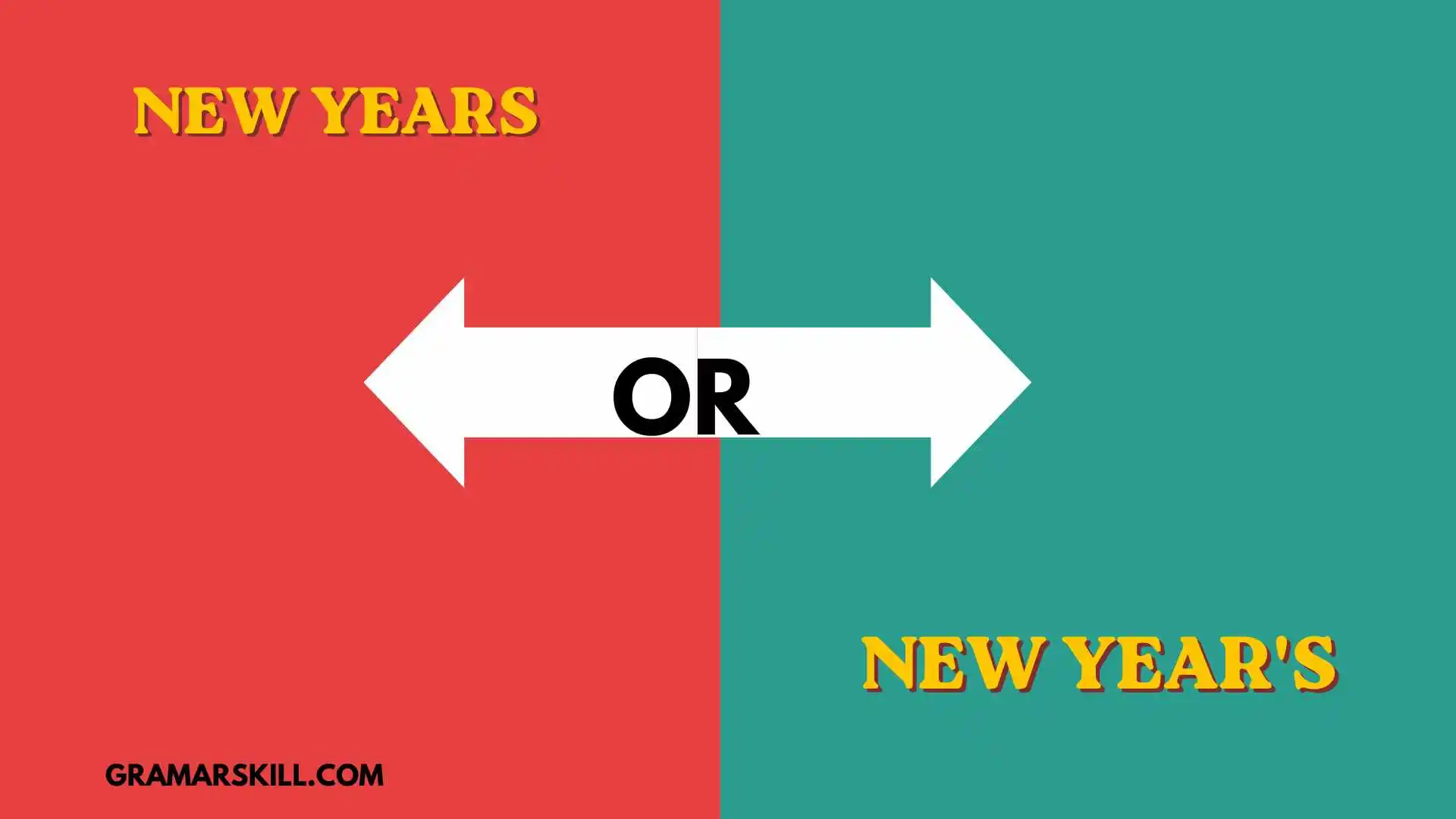
Have you ever paused while writing a message and wondered: Should I write “new years” or “new year’s”? You’re not alone. This small punctuation mark the apostrophe can completely change the meaning of your sentence. Many people, both in the UK and the US, struggle with this common grammar confusion.
The problem usually appears during the holiday season. Whether you’re writing greetings, social media captions, or formal emails, using the correct form matters. A simple mistake can make your writing look less professional or unclear.
Understanding the difference between “new years” and “new year’s” is important for clear communication. While both forms exist, they are not used in the same way. In this article, you’ll learn the correct usage, see real-life examples, and get simple tips to remember the rules easily.
Quick Answer
The correct form in most situations is “New Year’s” (with an apostrophe). It is used when referring to something related to the New Year, such as New Year’s Day, New Year’s Eve, or New Year’s resolution.
On the other hand, “new years” (without an apostrophe) is usually incorrect unless you are talking about multiple years in general. Therefore, for greetings and holiday references, always use “New Year’s”.
Meaning of the Correct Form (New Year’s)
The phrase “New Year’s” is a possessive form. This means something belongs to or is connected with the New Year.
Why is there an apostrophe?
The apostrophe shows possession. In this case:
- “New Year’s Day” = The day that belongs to the New Year
- “New Year’s Eve” = The evening before the New Year
- “New Year’s resolution” = A resolution for the New Year
Examples (UK & US English)
Both British and American English use this form in the same way.
- UK: I made a New Year’s resolution to exercise more.
- US: We’re hosting a party on New Year’s Eve.
- UK: Shops are closed on New Year’s Day.
- US: My New Year’s goal is to save money.
👉 As you can see, there is no difference between UK and US usage in this case.
Common Phrases with “New Year’s”
- New Year’s Eve
- New Year’s Day
- New Year’s celebration
- New Year’s party
- New Year’s wishes
These are all standard and correct.
Meaning of the Incorrect Form (new years)
The phrase “new years” (without an apostrophe) is generally incorrect when referring to the holiday.
However, it can be correct in a very specific situation.
When “new years” is correct
It is used when talking about multiple years, not the holiday.
Examples:
- We experienced many new years together.
- The project lasted for several new years.
Even in these cases, it is not very common. Most of the time, people mean the holiday, so they should use “New Year’s.”
Keyword Comparison / Key Differences
Let’s break it down clearly:
| Form | Meaning | Correct Usage | Example |
| New Year’s | Possessive (related to the holiday) | ✅ Correct | New Year’s Eve party |
| New Years | Plural (multiple years) | ⚠️ Rare use | Many new years passed |
| New Years (for holiday) | Incorrect | ❌ Wrong | Happy New Years ❌ |
Important Tip
👉 If you are talking about the holiday, always use “New Year’s” with an apostrophe.
Common Mistakes People Make
Many learners (and even native speakers) make similar mistakes. Let’s look at them:
1. Writing “Happy New Years”
❌ Incorrect
✅ Correct: Happy New Year!
👉 Note: “New Year” here does not need an apostrophe because it’s not possessive.
2. Forgetting the apostrophe in phrases
❌ New Years Eve
✅ New Year’s Eve
❌ New Years Day
✅ New Year’s Day
3. Adding an extra apostrophe
❌ New Year’s’ Eve
✅ New Year’s Eve
4. Confusing plural with possessive
❌ These are my New Years goals
✅ These are my New Year’s goals
5. Mixing UK and US grammar unnecessarily
Good news:
👉 There is no difference between UK and US English for this phrase. Both follow the same rule.
Correct Usage in Sentences
Here are some real-life examples to help you understand better:
Holiday Greetings
- Happy New Year!
- Wishing you a joyful New Year!
With Possessive Form
- We celebrated New Year’s Eve with friends.
- She wrote down her New Year’s resolutions.
- The New Year’s fireworks were amazing.
Formal Writing
- The company will reopen after New Year’s Day.
- Our New Year’s event was a success.
Informal Usage
- What are your New Year’s plans?
- Let’s throw a New Year’s party!
UK vs US Examples
There is no spelling difference, but slight style differences may appear:
- UK: I’m going to a New Year’s party tonight.
- US: I’m heading to a New Year’s party tonight.
Both are correct.
Tips to Remember the Correct Usage
Here are some easy tricks to help you remember:
1. Think of Ownership
Ask yourself:
👉 “Does this belong to the New Year?”
If yes → use New Year’s
2. Use the Shortcut Rule
- Holiday → New Year’s ✅
- Multiple years → new years (rare)
3. Remember Common Phrases
Memorize these:
- New Year’s Eve
- New Year’s Day
- New Year’s resolution
4. Avoid Overthinking
If you’re writing about celebrations, greetings, or events, just use:
👉 New Year’s
5. Visual Trick
Think of it like:
👉 New Year + ’s = Something related to the New Year
FAQs
1. Is “Happy New Year” or “Happy New Year’s” correct?
✅ Happy New Year is correct.
There is no apostrophe because it’s not showing possession.
2. Why do we say “New Year’s Eve”?
Because it means the evening belonging to the New Year. That’s why we use the possessive form.
3. Is “Happy New Years” wrong?
Yes, it is incorrect. Always write:
👉 Happy New Year
4. Do UK and US English use different forms?
No. Both use “New Year’s” in the same way.
5. Can “new years” ever be correct?
Yes, but only when talking about multiple years, not the holiday.
6. What about “New Years Eve party”?
❌ Incorrect
✅ Correct: New Year’s Eve party
7. Should I always use an apostrophe?
Use an apostrophe only when showing possession (New Year’s).
Do not use it in greetings like “Happy New Year.”
Conclusion
Understanding the difference between “new years” and “new year’s” is easier than it seems. The key point is simple: use “New Year’s” with an apostrophe when talking about the holiday or anything related to it. On the other hand, “new years” without an apostrophe is rarely used and usually incorrect in this context.
In both UK and US English, the rules are the same, so you don’t need to worry about regional differences. Just remember the basic rule, and you’ll avoid common mistakes easily.
READ MORE ARTICLES..
grandad or granddad: What’s the difference and usage? 2026
Fazed or Phased: What’s the difference & usage?
Hanukkah or Chanukah: What’s the difference & usage?
is estudiante masculine or feminine: What’s the difference? 2026

I’m Henry Collins, a passionate grammar enthusiast who loves making English simple and clear for everyone. I enjoy breaking down tricky grammar rules into easy, everyday language. Through my writing, I aim to help learners build confidence and write with accuracy. My goal is to turn confusion into clarity one word at a time.