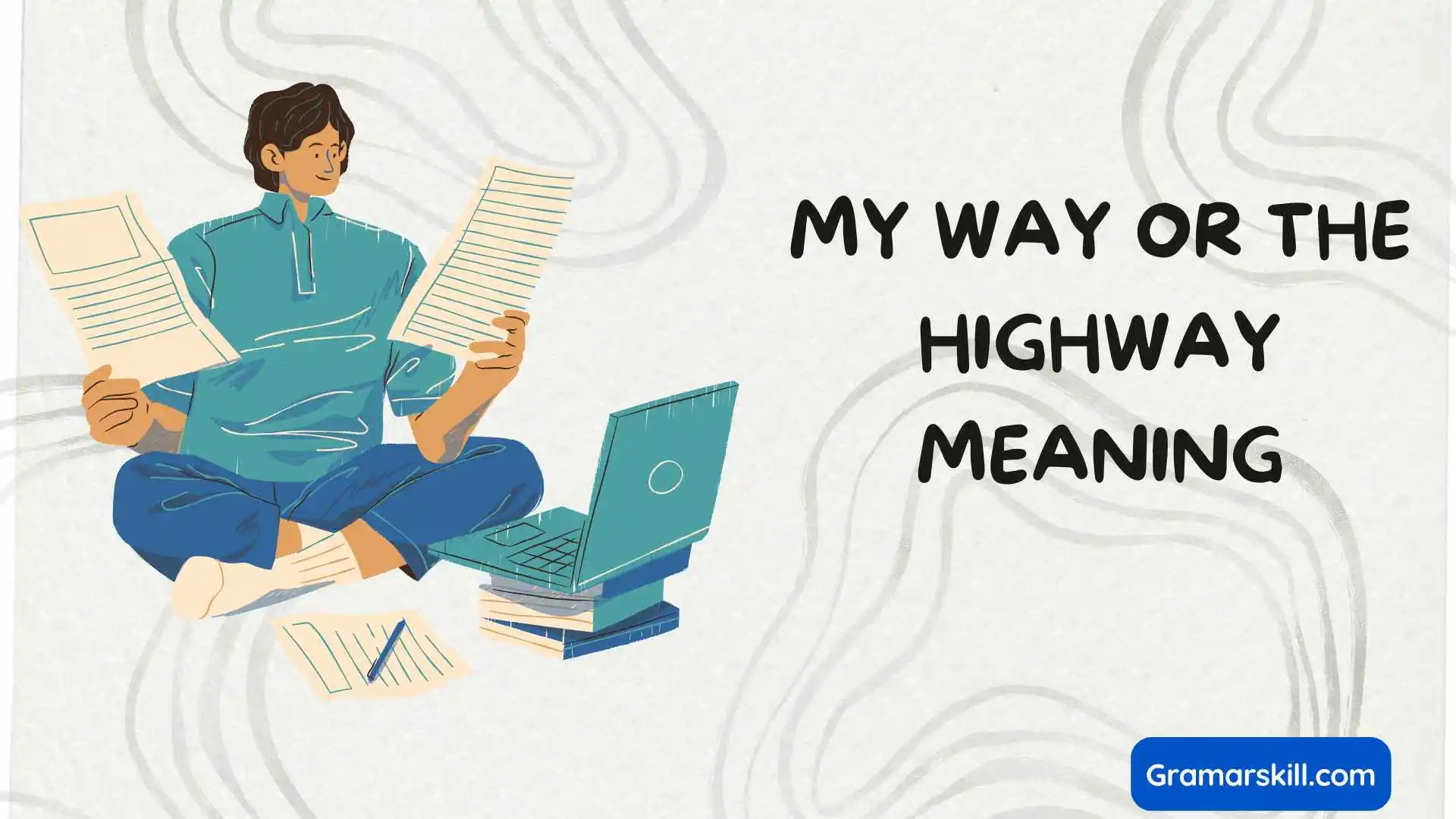
Have you ever heard someone say, “It’s my way or the highway” and wondered what it really means? This phrase is common in everyday conversations, movies, workplaces, and even relationships. However, many people feel confused about whether it’s formal, rude, or appropriate to use in different situations.
Understanding idioms like this is important because they help you sound more natural in English. Whether you are learning British English (UK) or American English (US), this expression appears in both. However, tone, context, and usage can slightly differ depending on where and how you use it.
In this detailed guide, you will learn the exact meaning, correct usage, common mistakes, and real-life examples of “my way or the highway.” By the end, you will feel confident using this phrase correctly in both UK and US contexts.
Quick Answer
“My way or the highway” means that someone refuses to accept any opinions or choices except their own. In simple words, it means: “Do things my way, or leave.”
This phrase often shows a strict, controlling, or stubborn attitude. It can sound strong or even rude, especially in formal situations. However, in casual conversations, it may be used jokingly among friends.
Meaning of the Correct Form
What Does “My Way or the Highway” Mean?
The idiom “my way or the highway” describes a situation where:
- One person demands complete control
- No compromise is allowed
- Others must either agree or walk away
Simple Explanation
- “My way” = Follow my rules
- “The highway” = Leave or go away
So, the full meaning becomes:
👉 “Follow my way, or leave.”
Usage in British English (UK)
In the UK, this phrase is commonly used in:
- Workplace discussions
- Informal conversations
- Describing strict leadership
Example (UK):
- “The manager has a ‘my way or the highway’ attitude, which makes teamwork difficult.”
Usage in American English (US)
In the US, the phrase is widely used in:
- Business environments
- Pop culture (movies, TV shows)
- Everyday speech
Example (US):
- “He runs his company with a my way or the highway approach.”
Tone and Context
However, the tone matters a lot:
- Negative tone: Controlling, bossy
- Neutral tone: Descriptive
- Humorous tone: Friendly teasing
Example (Funny):
- “When it comes to pizza toppings, she’s totally my way or the highway!”
Meaning of the Incorrect Form (if any)
The phrase “my way or the highway” is already the correct and fixed idiom. There is no official “incorrect version,” but people sometimes misuse or misunderstand it.
Common Misinterpretations
❌ Thinking it means “choosing between two options”
✔ Actually, it means no real choice—only one option is acceptable
❌ Using it in polite or formal writing
✔ It is mostly informal and can sound rude
Incorrect Usage Examples
- ❌ “You can pick any option it’s my way or the highway.”
👉 This is incorrect because the phrase does not allow multiple choices. - ❌ “Let’s discuss this calmly. It’s my way or the highway.”
👉 This contradicts the idea of discussion.
Keyword Comparison / Key Differences
Since this is an idiom, there is no direct “correct vs incorrect word” comparison. However, we can compare it with similar phrases.
“My Way or the Highway” vs Similar Expressions
| Phrase | Meaning | Tone |
| My way or the highway | No compromise | Strong / Negative |
| Take it or leave it | Limited choice | Neutral |
| Do it my way | Preference | Mild |
| No exceptions | Strict rule | Formal |
UK vs US Differences
There are no spelling differences between UK and US English for this idiom. However, usage style can vary slightly:
- UK: Slightly more formal tone in workplaces
- US: More commonly used in casual and business speech
Common Mistakes People Make
Even though the phrase is simple, people often misuse it. Let’s look at the most common mistakes.
1. Using It in Formal Writing
❌ “The policy is my way or the highway.”
✔ Better: “The policy does not allow flexibility.”
👉 This phrase sounds too aggressive for formal writing.
2. Using It When Compromise Exists
❌ “We can negotiate, but it’s my way or the highway.”
✔ Correct: Use it only when no negotiation is allowed
3. Misunderstanding the Tone
Some learners think it sounds neutral, but:
👉 It often sounds rude or controlling
4. Overusing the Phrase
Using it too often can make you sound:
- Bossy
- Uncooperative
- Difficult to work with
5. Using It in Sensitive Situations
Avoid using it in:
- Professional emails
- Academic writing
- Serious discussions
Correct Usage in Sentences
Here are practical examples for both UK and US audiences.
Everyday Conversations
- “He’s very stubborn it’s always my way or the highway with him.”
- “I don’t like her attitude. It’s my way or the highway every time.”
Workplace Examples
UK:
- “The supervisor’s my way or the highway style is causing problems.”
US:
- “The CEO runs the company with a my way or the highway mindset.”
Family Situations
- “Dad used to say it was his way or the highway.”
- “That parenting style feels too strict like my way or the highway.”
Humorous Use
- “When it comes to movies, it’s my way or the highway I choose every time!”
- “He’s joking, but he acts like it’s my way or the highway.”
Negative Context
- “A my way or the highway attitude can ruin relationships.”
- “Leaders should avoid a my way or the highway approach.”
Tips to Remember the Correct Usage
Here are some simple tricks to help you remember:
1. Think of a Road
Imagine:
- My way = my path
- Highway = exit / leaving
👉 If you don’t follow, you leave.
2. Remember: No Choice
This phrase always means:
👉 No compromise
3. Use It for Strong Situations Only
Only use it when:
- Someone is being strict
- No discussion is allowed
4. Avoid Formal Situations
Instead, use softer alternatives like:
- “Strict policy”
- “No flexibility”
5. Tone Matters
Ask yourself:
👉 Does this sound rude here?
If yes, don’t use it.
FAQs Section
1. Is “my way or the highway” rude?
Yes, it can sound rude or aggressive, especially in serious or professional situations. However, it can be playful among friends.
2. Can I use this phrase in formal writing?
No, it is best avoided in formal writing. Use more neutral phrases instead.
3. Is this phrase used in both UK and US English?
Yes, it is widely used in both UK and US English, with no spelling differences.
4. Does it always have a negative meaning?
Mostly yes. It usually describes a controlling or stubborn attitude. However, it can be used humorously in casual settings.
5. What are some alternatives to this phrase?
You can use:
- “Take it or leave it”
- “No compromise”
- “Strict rule”
6. Can I use it in business communication?
It is not recommended. It may sound unprofessional or harsh.
7. Why do people use this phrase?
People use it to express:
- Authority
- Control
- Lack of flexibility
Conclusion
The phrase “my way or the highway” is a powerful and expressive idiom in English. It clearly shows a situation where one person refuses to compromise and expects others to follow their rules or leave.
Although it is used in both UK and US English, you should be careful with tone and context. It often sounds strong or even rude, so it is best used in informal situations or when describing someone’s behavior rather than in professional communication.
To sum up:
- It means no compromise
- It reflects a strict or controlling attitude
- It should be used carefully to avoid sounding rude
READ MORE ARTICLES..
Say Your Peace or Piece: What’s the Correct Phrase? 2026
Latter or Ladder Meaning, Usage, and Common Mistakes 2026
Niece or Neice: Grammar Rules You Must Know Today 2026
To Who or To Whom: When to Use Each Correctly 2026

I am Julian Parker, a passionate grammar enthusiast and content writer dedicated to making English rules simple and easy to understand. I specialize in breaking down complex grammar topics into clear, practical explanations. I enjoy helping readers improve their writing skills with confidence. My goal is to make learning grammar engaging, simple, and accessible for everyone.