Have you ever heard someone say “hear hear” or “here here” and wondered which one is correct? You are not alone. Many English learners and even native speakers often confuse these two phrases because they sound identical but have entirely different meanings.
Understanding the difference is important, especially in formal writing, meetings, or when reading speeches. Using the wrong form can make your writing or speech look careless and may even confuse your audience. This is true for both UK and US English, although the phrase is more common in British contexts.
In this guide, we’ll break down the meanings, highlight common mistakes, and provide practical tips and examples so you can confidently use the correct phrase every time.
Quick Answer
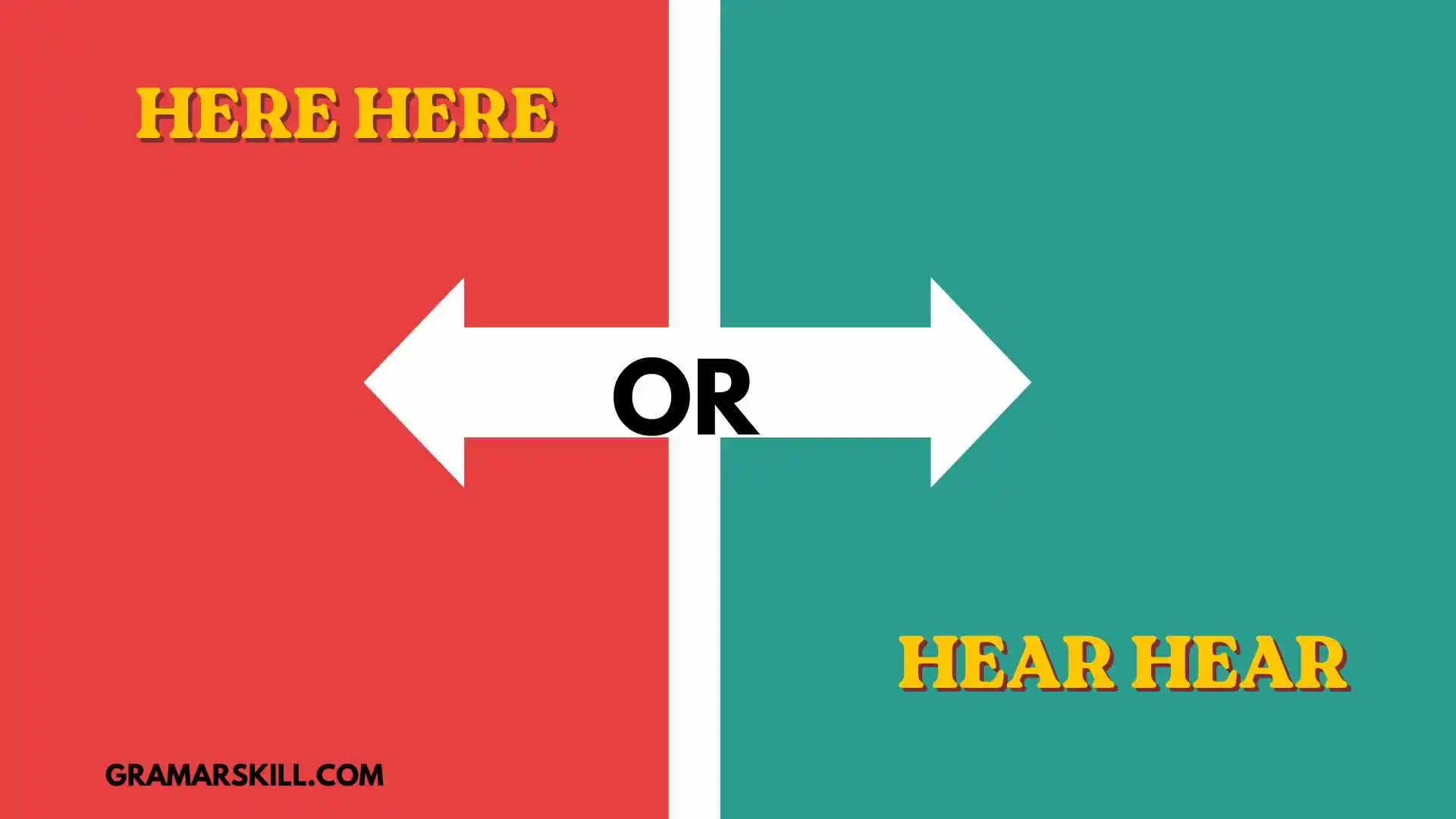
The correct phrase is “hear, hear”. It is used to express agreement or support with what someone else has said, especially during speeches or formal discussions.
“Here here” is incorrect in this context, as it refers literally to a location and does not convey approval or agreement.
Think of it this way: “hear, hear” = I hear and agree.
Meaning of the Correct Form
Hear, hear
Definition:
“Hear, hear” is an expression used to show strong agreement with someone else’s statement, often in formal or parliamentary settings. It signals that you are listening and approve of what is being said.
Examples in British English:
- During a parliamentary debate:
“We must invest more in education.”
MPs respond: “Hear, hear!” - In a meeting:
“Our team should prioritise customer satisfaction.”
Colleagues reply: “Hear, hear!”
Examples in American English:
While “hear, hear” is less commonly used in the US, it is still understood, especially in formal or literary contexts:
- “We need to protect our environment for future generations.”
Audience responds: “Hear, hear!”
Key Points:
- Always use a comma: “hear, hear”
- It is typically shouted or exclaimed to show agreement
- Commonly used in formal discussions, speeches, or debates
Meaning of the Incorrect Form
Here, here
Definition:
“Here, here” literally refers to a physical location. It is used when pointing out or referring to a place or position, not to show agreement.
Examples:
- “The keys are here, here on the table.”
- “I’ll meet you here, here by the entrance.”
Using “here here” instead of “hear, hear” in a meeting or debate would be incorrect and may confuse listeners or readers.
Common Mistake:
Many people write “here here” because it sounds the same as “hear, hear,” especially in informal writing. Always remember that agreement requires hearing, not a place.
Keyword Comparison / Key Differences

| Feature | Hear, hear | Here, here |
| Meaning | Expresses agreement | Refers to a physical location |
| Common Usage | UK Parliament, formal discussions | Everyday English, directions |
| UK English Frequency | High | Moderate |
| US English Frequency | Moderate | High |
| Spelling/Pronunciation | Same pronunciation, different meaning | Same pronunciation, different meaning |
| Correct Context | Agreement or approval | Location or pointing |
Tip: If you want to show approval, always choose “hear, hear.”
Common Mistakes People Make
- Confusing spelling with sound
- Wrong: “Here, here! I totally agree!”
- Correct: “Hear, hear! I totally agree!”
- Using it in informal texts incorrectly
- Some may write: “Here here, that’s right!”
- Remember, “hear, hear” is formal but can also be used humorously in informal writing.
- Misplacing the comma
- Wrong: “Hear hear!”
- Correct: “Hear, hear!”
- Using “here here” to show agreement
- Wrong: “Here here! That’s a great point!”
- Correct: “Hear, hear! That’s a great point!”
- Forgetting audience awareness
- In UK contexts, “hear, hear” is widely understood.
- In US contexts, if speaking to a general audience, consider explaining it or using “I agree” instead.
Correct Usage in Sentences
British English Examples
- “We should reduce carbon emissions immediately.”
Response: “Hear, hear!” - “Education is the key to a better future.”
Audience: “Hear, hear!” - “No one should be left behind in healthcare reforms.”
MPs: “Hear, hear!”
American English Examples
- “We must act now to protect our forests.”
Audience: “Hear, hear!” - “Supporting local businesses is essential.”
Colleagues: “Hear, hear!” - “Teamwork is crucial for our success.”
Meeting participants: “Hear, hear!”
Tips to Remember the Correct Usage
- Think of hearing, not location
- Hear = listen; Here = location
- Use a comma
- Correct: “Hear, hear!”
- Incorrect: “Hear hear!”
- Imagine a formal setting
- Picture a British Parliament or a debate where people are expressing agreement.
- Mnemonic Trick:
- H-E-A-R → I hear and agree
- H-E-R-E → I am at a location
- Practice in speech
- Say it aloud when agreeing with someone to remember the correct form.
FAQs
1. Is it “here here” or “hear hear”?
- The correct form is “hear, hear” to show agreement. “Here here” refers to a place and is incorrect in this context.
2. Can Americans use “hear, hear”?
- Yes, though it is less common. Americans often prefer “I agree,” but “hear, hear” is understood in formal or literary contexts.
3. Do you need a comma in “hear, hear”?
- Yes. The comma separates the repeated word and is grammatically correct.
4. Can “hear, hear” be used informally?
- Yes, sometimes humorously in informal writing or online posts.
5. What’s the origin of “hear, hear”?
- It originated in the British Parliament, meaning “listen and approve.”
6. Can “here here” ever be correct?
- Only when referring to a location, e.g., “The book is here, here on the desk.”
7. Is pronunciation the same for both?
- Yes, they sound identical, which is why spelling mistakes are common. Context is key.
Conclusion
To sum up, the correct phrase is “hear, hear”. It is used to express agreement or support, mainly in formal contexts, especially in the UK. “Here here” is incorrect when you mean agreement it only refers to a location.
Remember these simple tips: think about listening, not location, and always include a comma. Whether you are writing, speaking, or participating in a debate, using “hear, hear” correctly shows that you understand English nuances and are attentive to context.
Next time you hear someone make a point you strongly agree with, confidently respond with “hear, hear!” Your audience will appreciate your precision and clarity.

I’m Henry Collins, a passionate grammar enthusiast who loves making English simple and clear for everyone. I enjoy breaking down tricky grammar rules into easy, everyday language. Through my writing, I aim to help learners build confidence and write with accuracy. My goal is to turn confusion into clarity one word at a time.