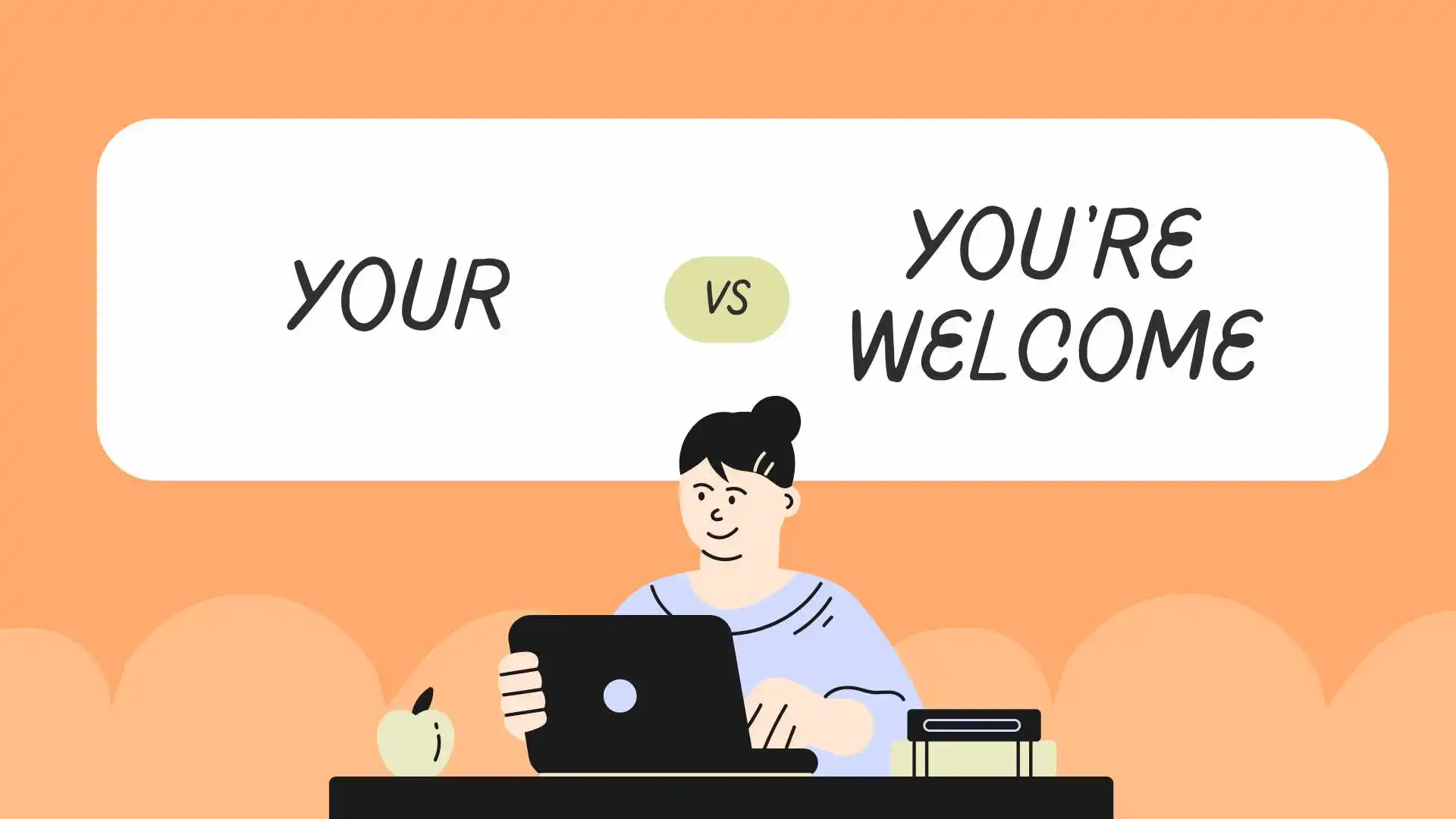
Have you ever typed “your welcome” instead of “you’re welcome” and wondered if it was correct? You’re not alone. This is one of the most common grammar mistakes in English, especially in casual writing like texts, emails, and social media posts. Many people mix up “your” and “you’re” because they sound the same when spoken, but they have completely different meanings.
Understanding the difference between your and you’re is important because even small mistakes can change the meaning of your sentence. Whether you are writing for school, work, or everyday communication, using the correct form helps you sound more professional and confident.
In this detailed guide, you’ll learn the correct usage of “your or you’re welcome”, see real-life examples, avoid common mistakes, and gain simple tips to remember the difference forever.
Quick Answer
The correct phrase is:
👉 “You’re welcome”
This is because “you’re” is a contraction of “you are.” So when you say “you’re welcome,” you are actually saying:
👉 “You are welcome.”
On the other hand, “your welcome” is incorrect because “your” shows possession (something belonging to you), which does not make sense in this context.
Meaning of the Correct Form
What Does “You’re Welcome” Mean?
“You’re welcome” is a polite response used when someone thanks you. It means that you are happy to help or that no thanks are necessary.
Breakdown:
- You’re = You are
- Welcome = Glad or pleased to help
So together:
👉 “You’re welcome” = “You are welcome”
Examples (UK & US English)
The usage is exactly the same in both UK and US English.
- Person A: Thank you for helping me.
Person B: You’re welcome. - UK Example:
“Thanks for holding the door.”
“You’re welcome!” - US Example:
“Thanks for your support.”
“You’re welcome!”
👉 In both regions, the meaning and usage are identical.
When to Use “You’re Welcome”
You should use it:
- After someone says thank you
- In polite conversations
- In emails or professional communication
- In everyday casual speech
Meaning of the Incorrect Form
What Does “Your Welcome” Mean?
Technically, “your welcome” is not correct in this situation.
Why?
- Your = Possessive adjective
- It shows ownership or belonging
Example of “Your” (Correct Usage)
- Your book is on the table.
- Is this your phone?
- I like your idea.
👉 In these examples, “your” shows that something belongs to “you.”
Why “Your Welcome” Is Wrong
If you say:
❌ “Your welcome”
It literally means:
👉 “The welcome belongs to you”
This does not make sense in response to “thank you,” so it is grammatically incorrect.
Keyword Comparison / Key Differences
Let’s clearly compare your and you’re:
| Word | Type | Meaning | Example |
| Your | Possessive adjective | Belonging to you | Your bag is here |
| You’re | Contraction | You are | You’re welcome |
Key Difference
- Your = Ownership
- You’re = You are
👉 Simple Rule:
If you can replace the word with “you are”, then use “you’re.”
Example Comparison
- ❌ Your welcome
- ✅ You’re welcome
- ❌ Your going to love this
- ✅ You’re going to love this
Common Mistakes People Make
Even advanced English speakers sometimes confuse these words. Let’s look at common mistakes:
1. Using “Your” Instead of “You’re”
❌ Your welcome
✅ You’re welcome
❌ Your amazing
✅ You’re amazing
2. Confusion in Fast Typing
People often type quickly and forget the apostrophe.
- ❌ Your welcome (typo)
- ✅ You’re welcome
3. Autocorrect Errors
Sometimes phones automatically change you’re to your, causing mistakes.
4. Not Understanding Contractions
Many learners don’t realize:
- You’re = You are
So they use the wrong form.
5. Informal Writing Habits
On social media, people sometimes ignore grammar rules, but this can lead to confusion in formal writing.
Correct Usage in Sentences
Let’s explore real-life examples for both UK and US audiences.
Everyday Conversations
- Thank you for your help.
👉 You’re welcome. - Thanks for the advice.
👉 You’re welcome.
Formal Situations
- Thank you for your time.
👉 You’re welcome. I’m happy to help. - Thank you for attending the meeting.
👉 You’re welcome.
Friendly Conversations
- Thanks for the gift!
👉 You’re welcome! I hope you like it.
Email Examples (UK & US)
Example 1:
Dear John,
Thank you for your assistance.
Reply:
You’re welcome. Please let me know if you need anything else.
Example 2:
Thanks for your quick response.
You’re welcome! Happy to help anytime.
Incorrect vs Correct Examples
- ❌ Your welcome
- ✅ You’re welcome
- ❌ Your very kind
- ✅ You’re very kind
Tips to Remember the Correct Usage
Here are some simple tricks to never confuse them again:
1. Replace with “You Are”
If the sentence makes sense with “you are”, then use “you’re.”
- You’re welcome → You are welcome ✔️
- Your welcome → Your are welcome ❌
2. Look for Ownership
If the sentence shows ownership, use your.
- Your car
- Your house
- Your idea
3. Remember the Apostrophe Trick
👉 You’re has an apostrophe → It’s a contraction
4. Practice Daily
Write sentences using both words:
- You’re doing great
- Your work is excellent
5. Slow Down When Writing
Take a second to check your sentence before sending it.
FAQs Section
1. Is “your welcome” ever correct?
No, “your welcome” is not correct when replying to “thank you.” Always use “you’re welcome.”
2. Why do people confuse “your” and “you’re”?
Because they sound the same when spoken. This is called a homophone.
3. Is there a difference between UK and US usage?
No, both British English and American English use “you’re welcome” in the same way.
4. Can I use “your welcome” in informal writing?
Even in informal writing, it is considered incorrect. It’s better to use the correct form.
5. What are alternatives to “you’re welcome”?
You can also say:
- No problem
- That’s alright
- My pleasure
- Anytime
- Not at all
👉 These are used in both UK and US English.
6. Is “you are welcome” correct?
Yes, “you are welcome” is the full form.
“You’re welcome” is just a shorter version.
7. How can I avoid this mistake in exams?
- Remember the rule: You’re = You are
- Double-check your sentences
- Practice writing examples
Conclusion
Understanding the difference between “your” and “you’re” is simple once you know the rule. While they sound the same, their meanings are completely different. “Your” shows possession, while “you’re” means “you are.”
When replying to someone who says “thank you,” the correct phrase is always:
👉 “You’re welcome.”
This rule applies equally in both UK and US English, so you don’t need to worry about regional differences. By using the tips shared in this guide like replacing the word with “you are” or checking for ownership you can avoid this common mistake easily.